Pre-School and Child Development.

A new GLO Discussion Paper finds a positive effect of preschool on the cognitive development of children in Algeria.

The Global Labor Organization (GLO) is an independent, non-partisan and non-governmental organization that functions as an international network and virtual platform to stimulate global research, debate and collaboration.

GLO Discussion Paper No. 557, 2020

Does Pre-School Improve Child Development and Affect the Quality of Parent-Child Interaction? Evidence from AlgeriaDownload PDF

GLO Fellow Moundir Lassassi

Author Abstract: This paper investigates the impact of attending early childcare on the quality of parent–child interactions and children’s cognitive outcomes. My identification strategy exploits geographical differences in terms of exposure to the program, controlling for the period when the program is implemented across Algerian municipalities as an instrument for individual early childcare attendance. I estimate 2SLS regression analysis and employ a difference-in-difference strategy. I use two Multiple Indicator Cluster Surveys conducted in 2006 and 2012. I find a positive effect of preschool on the cognitive development of children. In turn, the effect is only significant for mother with negative effect on the interaction between mother and children, which means that there is a substitution effect, mother use this time to do something else. These findings call for future research on parents’, especially mother’s, time use when their children attend early childcare.

GLO Discussion Papers are research and policy papers of the GLO Network which are widely circulated to encourage discussion. Provided in cooperation with EconStor, a service of the ZBW – Leibniz Information Centre for Economics, GLO Discussion Papers are among others listed in RePEc (see IDEAS,  EconPapers)Complete list of all GLO DPs – downloadable for free.

Ends;

Posted in News, Research | Comments Off on Pre-School and Child Development.

The Economic Consequences of Stay-at-Home Orders in the COVID-19 Crisis

A new GLO Discussion Paper studies COVID-19 stay-at-home orders in the United States and their consequences for infections, deaths, employment, wages, tax revenues and hospital costs.

The Global Labor Organization (GLO) is an independent, non-partisan and non-governmental organization that functions as an international network and virtual platform to stimulate global research, debate and collaboration.

GLO Discussion Paper No. 559, 2020

COVID-19, Stay-at-Home Orders and Employment: Evidence from CPS DataDownload PDF
by
Beland, Louis-Philippe & Brodeur, Abel & Wright, Taylor

GLO Fellows Louis-Philippe Beland & Abel Brodeur

Author Abstract: In this paper, we examine the short-term consequences of COVID-19 and evaluate the impacts of stay-at-home orders on employment and wages in the United States. Guided by a pre-analysis plan, we document that COVID-19 increased the unemployment rate, decreased hours of work and labor force participation, especially for younger workers, non-white, not married and less-educated workers. We built four indexes (exposure to disease, proximity to coworkers, work remotely and critical workers) to study the impact of COVID-19. We find that workers that can work remotely are significantly less likely to have their labor market outcomes affected, while workers working in proximity to coworkers are more affected. The unemployment effects are significantly larger for states that implemented stay-at-home orders. Our estimates suggest that, as of early May, these policies increased unemployment by nearly 4 percentage points, but reduced COVID-19 cases by 186,600-311,000, and deaths by 17,851-23,325. We apply our estimates to compute lost income ($18.6-$21.4 billion), reduced government income tax revenues ($3.4-$5.5 billion), increased unemployment insurance benefit payments ($5-$5.8 billion) and reduced hospital costs ($0.7-$1.2 billion). Despite the jobs lost, age adjusted value of statistical life suggests that stay-at-home orders are cost effective.

The Journal of Population Economics welcomes submissions dealing with the demographic aspects of the Coronavirus Crisis.

Yun Qiu, Xi Chen & Wei Shi (2020): Impacts of Social and Economic Factors on the Transmission of Coronavirus Disease 2019 (COVID-19) in China, GLO Discussion Paper, No. 494.
REVISED DRAFT NOW PUBLISHED OPEN ACCESS ONLINE: Journal of Population Economics, Issue 4, 2020.

Further publication on COVID-19 of a GLO DP:
GLO Discussion Paper No. 508, 2020
Inter-country Distancing, Globalization and the Coronavirus Pandemic – Download PDF
by
Zimmermann, Klaus F. & Karabulut, Gokhan & Bilgin, Mehmet Huseyin & Doker, Asli Cansin is now forthcoming OPEN ACCESS in The World Economy doi:10.1111/twec.12969 PREPUBLICATION VERSION

More from the GLO Coronavirus Cluster

GLO Discussion Papers are research and policy papers of the GLO Network which are widely circulated to encourage discussion. Provided in cooperation with EconStor, a service of the ZBW – Leibniz Information Centre for Economics, GLO Discussion Papers are among others listed in RePEc (see IDEAS,  EconPapers)Complete list of all GLO DPs – downloadable for free.

Ends;
Posted in News, Research | Comments Off on The Economic Consequences of Stay-at-Home Orders in the COVID-19 Crisis

Institutional Trust and Medical Care Seeking during the COVID-19 Crisis in China

A new GLO Discussion Paper finds that in China institutional trust has been an important factor influencing adequate preventive behavior and seeking formal medical care during the COVID-19 outbreak.

The Global Labor Organization (GLO) is an independent, non-partisan and non-governmental organization that functions as an international network and virtual platform to stimulate global research, debate and collaboration.

GLO Discussion Paper No. 558, 2020

The Role of Institutional Trust in Medical Care Seeking during the COVID-19 Pandemic Download PDF
by
Wong, Li Ping & Wu, Qunhong & Hao, Yanhua & Chen, Xi & Chen, Zhuo & Alias, Haridah & Shen, Mingwang & Hu, Jingcen & Duan, Shiwei & Zhang, Jinjie & Han, Liyuan

GLO Fellow Xi Chen

Author Abstract: This paper investigates the associations between institution trust and public response to the COVID-19 outbreak. An Internet-based, cross-sectional survey was administered on January 29, 2020 to the epicenter Hubei province, China. A total of 4,393 adults who ≥18 years of age and residing or working in the province of Hubei were included in the study. The majority of the participants expressed a higher level of trust in the information and preventive instructions provided by the central government than by the local government. Being under quarantine (adjusted odds ratio (OR) = 2.35, 95% confidence interval (CI) 1.80–3.08) and having a high institutional trust score (OR = 2.23, 95% CI 1.96–2.53) were both strong and significant determinants of higher preventive behavior scores. The majority of study participants (85.7%, n = 3,640) reported that they would seek hospital treatment if they suspected themselves to have been infected with COVID-19. Few of the participants from Wuhan (16.6%, n = 475) and those participants who were under quarantine (13.8%, n = 550) expressed an unwillingness to seek hospital treatment. Institutional trust is an important factor influencing adequate preventive behavior and seeking formal medical care during an outbreak.

The Journal of Population Economics welcomes submissions dealing with the demographic aspects of the Coronavirus Crisis.

Yun Qiu, Xi Chen & Wei Shi (2020): Impacts of Social and Economic Factors on the Transmission of Coronavirus Disease 2019 (COVID-19) in China, GLO Discussion Paper, No. 494.
REVISED DRAFT NOW PUBLISHED OPEN ACCESS ONLINE: Journal of Population Economics, Issue 4, 2020.

Further publication on COVID-19 of a GLO DP:
GLO Discussion Paper No. 508, 2020
Inter-country Distancing, Globalization and the Coronavirus Pandemic – Download PDF
by
Zimmermann, Klaus F. & Karabulut, Gokhan & Bilgin, Mehmet Huseyin & Doker, Asli Cansin is now forthcoming OPEN ACCESS in The World Economy doi:10.1111/twec.12969 PREPUBLICATION VERSION

More from the GLO Coronavirus Cluster

GLO Discussion Papers are research and policy papers of the GLO Network which are widely circulated to encourage discussion. Provided in cooperation with EconStor, a service of the ZBW – Leibniz Information Centre for Economics, GLO Discussion Papers are among others listed in RePEc (see IDEAS,  EconPapers)Complete list of all GLO DPs – downloadable for free.

Ends;

Posted in News, Research | Comments Off on Institutional Trust and Medical Care Seeking during the COVID-19 Crisis in China

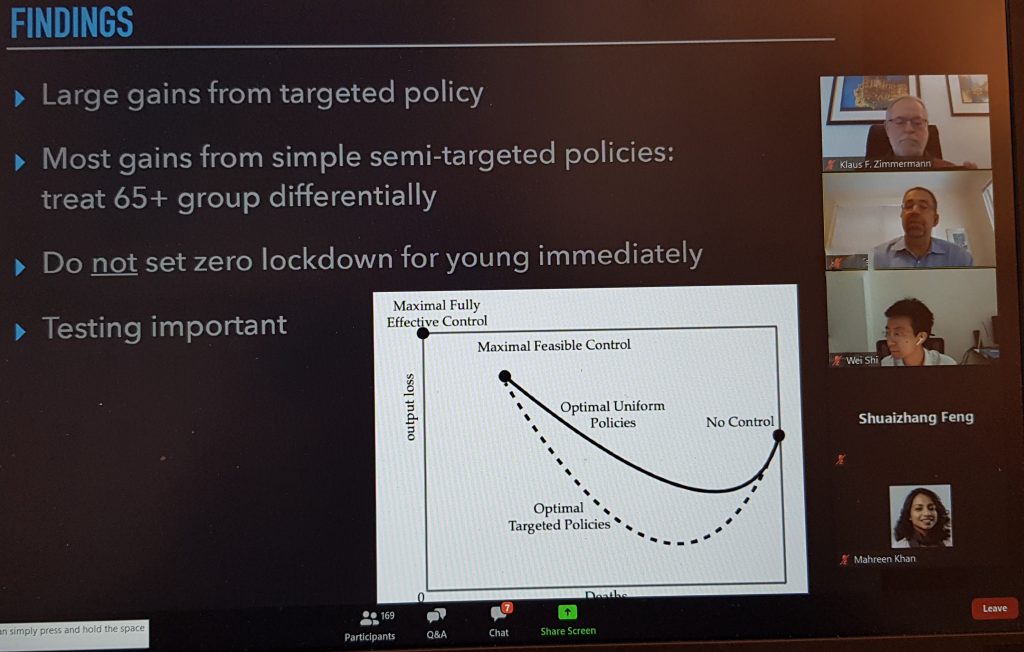
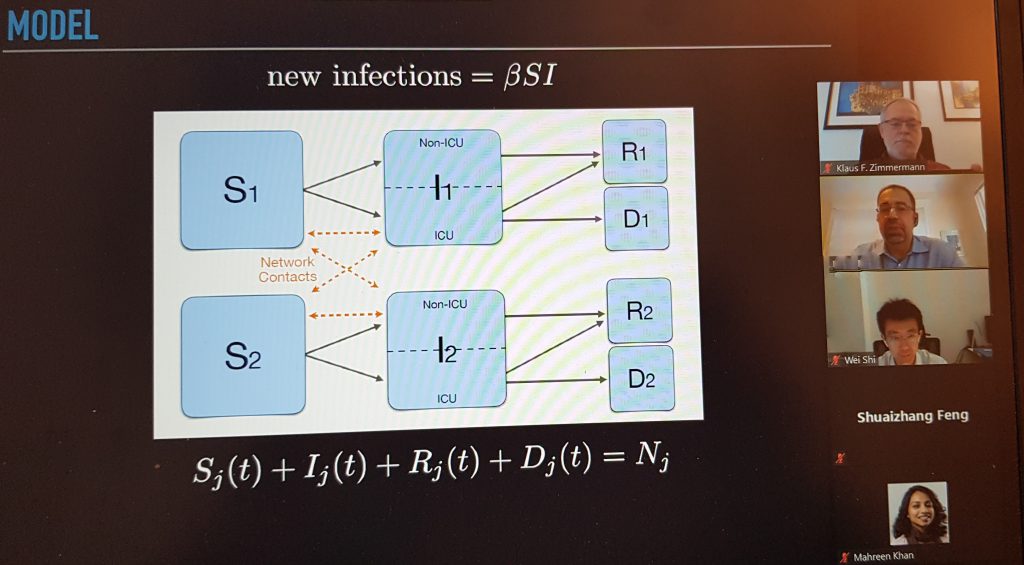
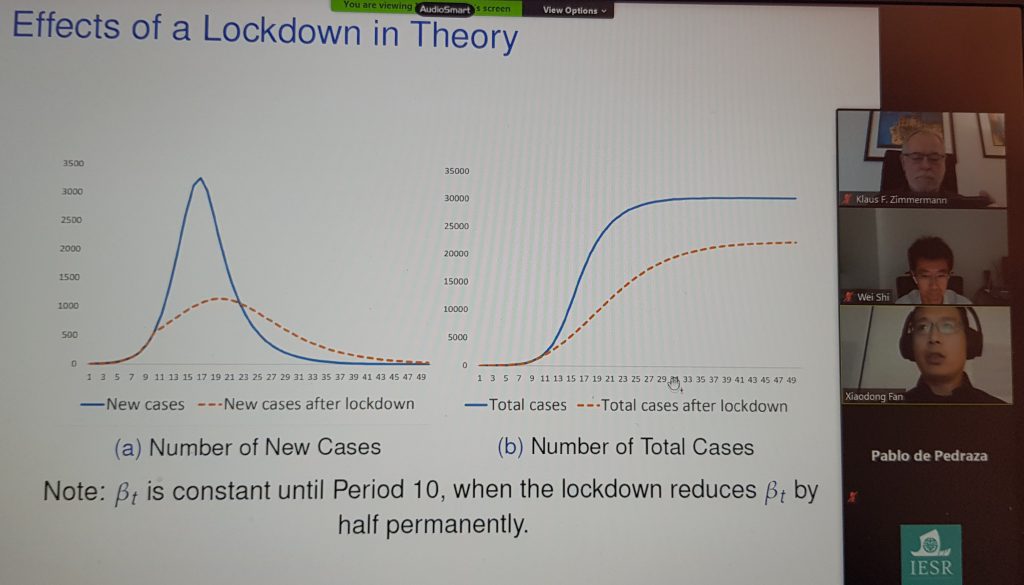
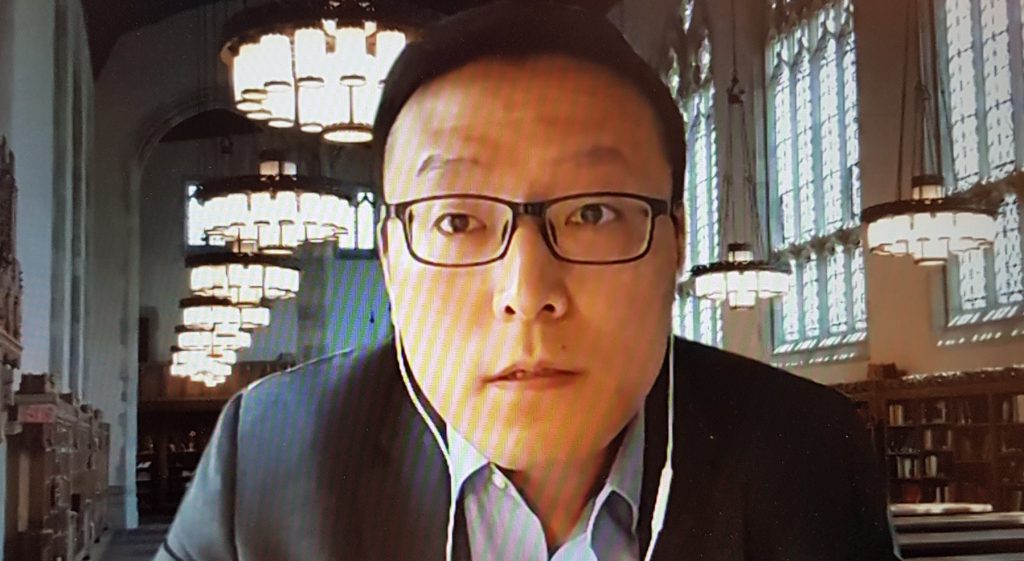
Now Third Day starts: IESR-GLO Joint Conference on COVID-19. AND Flashlight of Day II (Saturday).

Third IESR-GLO Joint Conference. The Institute for Economic and Social Research (IESR) at Jinan University and the Global Labor Organization (GLO) are jointly organizing a virtual conference on economic issues related to the coronavirus (Covid-19) pandemic.

  • Keynote addresses by Daron Acemoglu (MIT) and Charles Manski (Northwestern University).

Day 2; Saturday. June 6, 2020.
Keynote: Charles Manski (Northwestern University)
Introduced by Session Chair Yingyao Hu (Johns Hopkins University)

A selection of panelists:
Bruce A. Weinberg, Sen Ma, Osea Giuntella, Jubo Jan, and Yubo Yan

Organizers

Ends;

Posted in Events, News | Comments Off on Now Third Day starts: IESR-GLO Joint Conference on COVID-19. AND Flashlight of Day II (Saturday).

Happiness-lost: Did Governments make the right decisions to combat Covid-19? The Costs for South Africa.

A new GLO Discussion Paper analyzes the impact of both Covid-19 and the lockdown on happiness in South Africa which is significant.

The Global Labor Organization (GLO) is an independent, non-partisan and non-governmental organization that functions as an international network and virtual platform to stimulate global research, debate and collaboration.

GLO Discussion Paper No. 556, 2020

Happiness-lost: Did Governments make the right decisions to combat Covid-19? Download PDF
by
Greyling, Talita & Rossouw, Stephanie & Adhikari, Tamanna

GLO Fellows Talita Greyling & Stephanie Rossouw

Author Abstract: Amidst the rapid global spread of Covid-19, many governments enforced country-wide lockdowns, with likely severe well-being consequences. The actions by governments triggered a debate on whether the well-being and economic costs of a lockdown surpass the benefits perceived from a lower infection rate. In this regard, South Africa is an extreme case: enforcing very stringent lockdown regulations, while amid an economic crisis. We analyze the impact of both Covid-19 and the lockdown on happiness. We use the Gross National Happiness Index to compare the determinants of happiness before and after the Covid-19 lockdown regulations. Further, we estimate the likelihood of happiness levels in 2020, reaching the average levels in 2019 using two models; one predicting the likelihood after the lockdown was enforced and the other if no lockdown regulations were in place. The results shed light on happiness outcomes in a scenario of lockdown versus no lockdown.

The Journal of Population Economics welcomes submissions dealing with the demographic aspects of the Coronavirus Crisis.

Yun Qiu, Xi Chen & Wei Shi (2020): Impacts of Social and Economic Factors on the Transmission of Coronavirus Disease 2019 (COVID-19) in China, GLO Discussion Paper, No. 494.
REVISED DRAFT NOW PUBLISHED OPEN ACCESS ONLINE: Journal of Population Economics, Issue 4, 2020.

Further publication on COVID-19 of a GLO DP:
GLO Discussion Paper No. 508, 2020
Inter-country Distancing, Globalization and the Coronavirus Pandemic – Download PDF
by
Zimmermann, Klaus F. & Karabulut, Gokhan & Bilgin, Mehmet Huseyin & Doker, Asli Cansin is now forthcoming OPEN ACCESS in The World Economy doi:10.1111/twec.12969 PREPUBLICATION VERSION

More from the GLO Coronavirus Cluster

GLO Discussion Papers are research and policy papers of the GLO Network which are widely circulated to encourage discussion. Provided in cooperation with EconStor, a service of the ZBW – Leibniz Information Centre for Economics, GLO Discussion Papers are among others listed in RePEc (see IDEAS,  EconPapers)Complete list of all GLO DPs – downloadable for free.

Ends;

Posted in News, Research | Comments Off on Happiness-lost: Did Governments make the right decisions to combat Covid-19? The Costs for South Africa.

Second Day: IESR-GLO Joint Conference on COVID-19 with Daron Acemoglu, Charles Manski & 16 paper presenters. Some pictures of yesterday.

Third IESR-GLO Joint Conference. The Institute for Economic and Social Research (IESR) at Jinan University and the Global Labor Organization (GLO) are jointly organizing a virtual conference on economic issues related to the coronavirus (Covid-19) pandemic.

  • Keynote addresses by Daron Acemoglu (MIT) and Charles Manski (Northwestern University).

Organizers

Ends;

Posted in Events, News | Comments Off on Second Day: IESR-GLO Joint Conference on COVID-19 with Daron Acemoglu, Charles Manski & 16 paper presenters. Some pictures of yesterday.

Employment Losses from COVID-19 in the United States

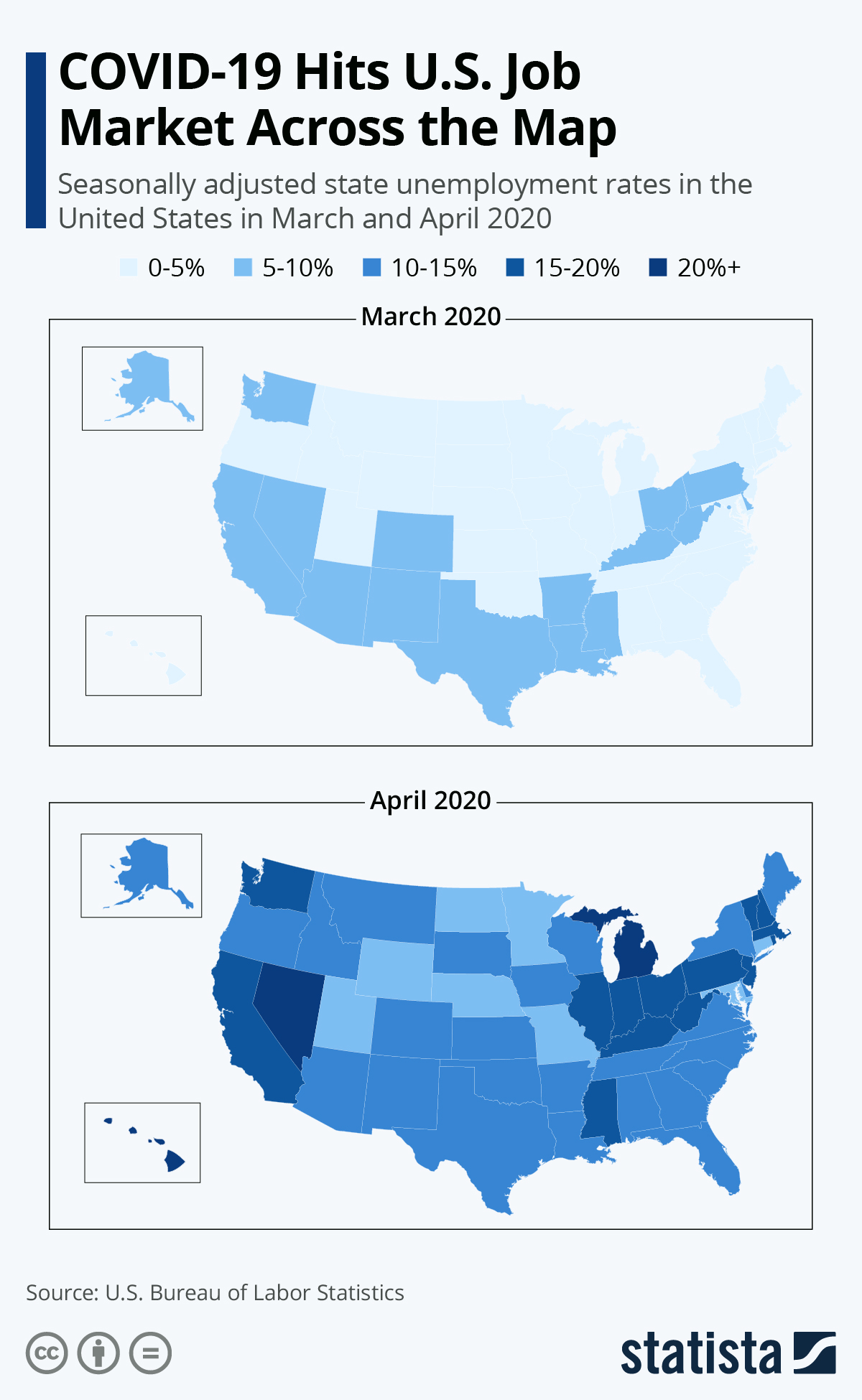
A new GLO Discussion Paper documents the employment losses in April 2020 across various groups using the U.S. Current Population Survey. Individuals with less education and lower family income experienced much larger employment losses than their more educated and higher income counterparts. Hispanics and blacks were more adversely affected than whites.

The Global Labor Organization (GLO) is an independent, non-partisan and non-governmental organization that functions as an international network and virtual platform to stimulate global research, debate and collaboration.

GLO Discussion Paper No. 554, 2020

The Distributional Impacts of Early Employment Losses from COVID-19Download PDF
by
Cho, Seung Jin & Winters, John V.

GLO Fellow John Winters

Author Abstract: COVID-19 substantially decreased employment, but the effects vary among demographic and socioeconomic groups. We document the employment losses in April 2020 across various groups using the U.S. Current Population Survey. The unemployment rate understates employment losses. We focus on the percentage of the civilian population that is employed and at work. Young persons experienced the largest employment losses. Individuals with less education and lower family income experienced much larger employment losses than their more educated and higher income counterparts. Hispanics and blacks were more adversely affected than whites.

Infographic: COVID-19 Hits U.S. Job Market Across the Map | Statista

COVIT-19 Hits U.S. Job Market

The Journal of Population Economics welcomes submissions dealing with the demographic aspects of the Coronavirus Crisis. After fast refereeing, successful papers are published in the next available issue. An example:

Yun Qiu, Xi Chen & Wei Shi (2020): Impacts of Social and Economic Factors on the Transmission of Coronavirus Disease 2019 (COVID-19) in China, GLO Discussion Paper, No. 494.
REVISED DRAFT NOW PUBLISHED OPEN ACCESS ONLINE: Journal of Population Economics, Issue 4, 2020.

Further publication on COVID-19 of a GLO DP:
GLO Discussion Paper No. 508, 2020
Inter-country Distancing, Globalization and the Coronavirus Pandemic – Download PDF
by
Zimmermann, Klaus F. & Karabulut, Gokhan & Bilgin, Mehmet Huseyin & Doker, Asli Cansin is now forthcoming OPEN ACCESS in The World Economy doi:10.1111/twec.12969 PREPUBLICATION VERSION

More from the GLO Coronavirus Cluster

GLO Discussion Papers are research and policy papers of the GLO Network which are widely circulated to encourage discussion. Provided in cooperation with EconStor, a service of the ZBW – Leibniz Information Centre for Economics, GLO Discussion Papers are among others listed in RePEc (see IDEAS,  EconPapers)Complete list of all GLO DPs – downloadable for free.

Ends;
Posted in News, Research | Comments Off on Employment Losses from COVID-19 in the United States

Lockdowns, Social Distancing and Trust

A new GLO Discussion Paper documents the socioeconomic determinants of COVID-19 stay-at-home orders’ compliance in the U.S. using cell phone data. Stay-at-home orders reduce mobility by about 8-10 percentage points; high-trust counties decrease their mobility significantly more than low-trust counties post-lockdown.

The Global Labor Organization (GLO) is an independent, non-partisan and non-governmental organization that functions as an international network and virtual platform to stimulate global research, debate and collaboration.

GLO Discussion Paper No. 553, 2020

Stay-at-Home Orders, Social Distancing and TrustDownload PDF
by
Brodeur, Abel & Grigoryeva, Idaliya & Kattan, Lamis

GLO Fellow Abel Brodeur

Author Abstract: Better understanding whether and how communities respond to government decisions is crucial for policy makers and health officials in response to the COVID-19 pandemic. In this study, we document the socioeconomic determinants of COVID-19 stay-at-home orders’ compliance in the U.S. Using cell phone data measuring changes in average distance traveled and non- essential visitation, we find that: stay-at-home orders reduce mobility by about 8-10 percentage points; high-trust counties decrease their mobility significantly more than low-trust counties post-lockdown; and counties with relatively more self-declared democrats decrease significantly more their mobility. We also provide evidence that the estimated effect on compliance post-lockdown is especially large for trust in the press, and relatively smaller for trust in science, medicine or government.

The Journal of Population Economics welcomes submissions dealing with the demographic aspects of the Coronavirus Crisis. After fast refereeing, successful papers are published in the next available issue. An example:

Yun Qiu, Xi Chen & Wei Shi (2020): Impacts of Social and Economic Factors on the Transmission of Coronavirus Disease 2019 (COVID-19) in China, GLO Discussion Paper, No. 494.
REVISED DRAFT NOW PUBLISHED OPEN ACCESS ONLINE: Journal of Population Economics, Issue 4, 2020.

Further publication on COVID-19 of a GLO DP:
GLO Discussion Paper No. 508, 2020
Inter-country Distancing, Globalization and the Coronavirus Pandemic – Download PDF
by
Zimmermann, Klaus F. & Karabulut, Gokhan & Bilgin, Mehmet Huseyin & Doker, Asli Cansin is now forthcoming OPEN ACCESS in The World Economy doi:10.1111/twec.12969 PREPUBLICATION VERSION

More from the GLO Coronavirus Cluster

GLO Discussion Papers are research and policy papers of the GLO Network which are widely circulated to encourage discussion. Provided in cooperation with EconStor, a service of the ZBW – Leibniz Information Centre for Economics, GLO Discussion Papers are among others listed in RePEc (see IDEAS,  EconPapers)Complete list of all GLO DPs – downloadable for free.

Ends;
Posted in News, Research | Comments Off on Lockdowns, Social Distancing and Trust

Using Google Trends to Identify the Well-Being Consequences of Lockdowns During the COVID-19 Crisis.

A new GLO Discussion Paper suggests that people’s mental health may have been severely affected by the lockdowns executed during the COVID-19 crisis.

The Global Labor Organization (GLO) is an independent, non-partisan and non-governmental organization that functions as an international network and virtual platform to stimulate global research, debate and collaboration.

GLO Discussion Paper No. 552, 2020

COVID-19, Lockdowns and Well-Being: Evidence from Google TrendsDownload PDF
by
Brodeur, Abel & Clark, Andrew E. & Fleche, Sarah & Powdthavee, Nattavudh

GLO Fellows Abel Brodeur & Andrew Clark

Author Abstract: The COVID-19 pandemic has led many governments to implement lockdowns. While lockdowns may help to contain the spread of the virus, they may result in substantial damage to population well-being. We use Google Trends data to test whether the lockdowns implemented in Europe and America led to changes in well-being related topic search terms. Using differences-in-differences and a regression discontinuity design to evaluate the causal effects of lockdown, we find a substantial increase in the search intensity for boredom in Europe and the US. We also found a significant increase in searches for loneliness, worry and sadness, while searches for stress, suicide and divorce on the contrary fell. Our results suggest that people’s mental health may have been severely affected by the lockdown.

A related paper using Google Trends has studied the health and wellbeing consequences of the Great Recession:

Nikolaos Askitas and Klaus F. Zimmermann, Health and well-being in the great recession, International Journal of Manpower 36 (2015), (1), 26-47.

The Journal of Population Economics welcomes submissions dealing with the demographic aspects of the Coronavirus Crisis. After fast refereeing, successful papers are published in the next available issue. An example:

Yun Qiu, Xi Chen & Wei Shi (2020): Impacts of Social and Economic Factors on the Transmission of Coronavirus Disease 2019 (COVID-19) in China, GLO Discussion Paper, No. 494.
REVISED DRAFT NOW PUBLISHED OPEN ACCESS ONLINE: Journal of Population Economics, Issue 4, 2020.

Further publication on COVID-19 of a GLO DP:
GLO Discussion Paper No. 508, 2020
Inter-country Distancing, Globalization and the Coronavirus Pandemic – Download PDF
by
Zimmermann, Klaus F. & Karabulut, Gokhan & Bilgin, Mehmet Huseyin & Doker, Asli Cansin is now forthcoming OPEN ACCESS in The World Economy doi:10.1111/twec.12969 PREPUBLICATION VERSION

More from the GLO Coronavirus Cluster

GLO Discussion Papers are research and policy papers of the GLO Network which are widely circulated to encourage discussion. Provided in cooperation with EconStor, a service of the ZBW – Leibniz Information Centre for Economics, GLO Discussion Papers are among others listed in RePEc (see IDEAS,  EconPapers)Complete list of all GLO DPs – downloadable for free.

Ends;
Posted in News, Research | Comments Off on Using Google Trends to Identify the Well-Being Consequences of Lockdowns During the COVID-19 Crisis.

Intergenerational consequences of maternal domestic violence

A new GLO Discussion Paper studies the causal impact of maternal domestic violence on the nutritional status of young children.

The Global Labor Organization (GLO) is an independent, non-partisan and non-governmental organization that functions as an international network and virtual platform to stimulate global research, debate and collaboration.

GLO Discussion Paper No. 551, 2020

Intergenerational consequences of maternal domestic violence: Effect on nutritional status of children Download PDF
by
Pakrashi, Debayan & Saha, Sarani

GLO Fellows Debayan Pakrashi & Sarani Saha

Author Abstract: In this paper, we empirically estimate the causal impact of maternal domestic violence on the nutritional status of her children aged below five years. Using detailed dataset from the current and fourth round of the National Family Health Survey, we find robust evidence that violence experienced by mothers at the hands of her husband significantly increases the likelihood of her children being malnourished. When we focus on identifying the pathways through which domestic violence affect child health outcomes, we find that while domestic violence primarily affects child health via deterioration in maternal health, neglect of children in terms of inadequate provision of essential child care also seem to matter. The results from the heterogeneity analysis finally suggest that the detrimental effect of such violence is significantly less pronounced for children born to mothers who are currently working and are thus empowered.

GLO Discussion Papers are research and policy papers of the GLO Network which are widely circulated to encourage discussion. Provided in cooperation with EconStor, a service of the ZBW – Leibniz Information Centre for Economics, GLO Discussion Papers are among others listed in RePEc (see IDEAS,  EconPapers)Complete list of all GLO DPs – downloadable for free.

Ends;

Posted in News, Research | Comments Off on Intergenerational consequences of maternal domestic violence