A new GLO Discussion Paper shows that the 2019 Austrian social assistance reform while cutting substantially social assistance benefits for migrants and families with children had only a small effect on total labor supply.
The Global Labor Organization (GLO) is an independent, non-partisan and non-governmental organization that functions as an international network and virtual platform to stimulate global research, debate and collaboration.
Author Abstract: Financial incentives affect the labour supply decisions of households, but typically the impact of such incentives varies significantly across household types. While there is a substantial literature on the labour supply effects of tax reforms and in-work benefits, the impact of changes in social assistance benefits has received less attention. This paper analyses the impact of the Austrian reform proposal ‘Neue Sozialhilfe’ (“New Social Assistance”), which was introduced in 2019 and substantially cut social assistance benefits for migrants and families with children. We show that the labor supply effects of these changes in social assistance differ substantially across household types. While women exhibit higher labor supply elasticities in our estimates, the overall effects of the reform are especially strong for men and migrants. Couples with children and migrants, i.e. the groups which were hit the hardest by the reform’s social assistance reductions, show the strongest labor supply reactions to the ‘New Social Assistance’. Furthermore, we show that overall the reform has a positive, but small, effect on the intensive margin of labor supply.
A new GLO Discussion Paper using a Roy-Rosen model to simulate the effects of the minimum wage for the Brazilian economy. The policy might be desirable if employment losses are concentrated in jobs characterized by low surplus.
The Global Labor Organization (GLO) is an independent, non-partisan and non-governmental organization that functions as an international network and virtual platform to stimulate global research, debate and collaboration.
Author Abstract: We study the effects of labor market policies using a bargaining model featuring compensating differentials (Rosen, 1986) and self-selection (Roy, 1951). The framework allows us to create a taxonomy of formal and informal employment. We use the model to estimate the effects of the minimum wage for the Brazilian economy using the “PNAD” dataset for the years 2001-2005. Our results suggest that, although the minimum wage generates unemployment and reallocation of labor to the informal sector, the policy might be desirable if the employment losses are concentrated in jobs characterized by low surplus.
A new GLO Discussion Paper empirically examines the influence of fintech innovation on bank fragility for 690 banks across 34 Sub Saharan African countries confirming its destabilizing impact.
The Global Labor Organization (GLO) is an independent, non-partisan and non-governmental organization that functions as an international network and virtual platform to stimulate global research, debate and collaboration.
Author Abstract: There is a momentous debate on the role played by financial technology (fintech) innovation in the fragility of the banking sector. Considering the importance of financial solidness, contradictory theoretical predictions and empirical evidence, the in-depth re-investigation of this relation is needed. Using data of 690 banks across 34 Sub Saharan African countries for the period 1999-2015 along with FGLS, GMM, Panel Threshold regression and PCA econometric method, this paper empirically examines the influence of fintech innovation on bank fragility. Mainly the destabilizing impact of fintech innovation is confirmed for our baseline investigation but later relativized with a stabilizing impact after a certain threshold. Moreover, the results highlight also that the macroeconomic environment is important in explaining bank fragility and suggested that public policy should take into account some specific destabilizing consequences on the banking system. Besides, the simultaneous hypothesis test of the innovation fragility nexus conditional to some relevant variables reveals that financial openness does matter while investment, commercial openness and monetary policy do not. Lastly, the comparative analysis validates our heterogeneity hypothesis; countries with the high size banking sector, colonialized by France and members of monetary union performs better than the others in terms of bank solidness. These results indicate that suitable fintech innovation policy even between the same regions could be rather different. Financial instability appeared also to increase bank fragility. This paper contributes to the limited literature on fintech innovation at both the macro and micro levels in sub-Saharan Africa.
A new GLO Discussion Paper shows for UK data that the rise of women in the top 1% is primarily accounted for by their greater increases (relative to men) in the number of years spent in full-time education.
The Global Labor Organization (GLO) is an independent, non-partisan and non-governmental organization that functions as an international network and virtual platform to stimulate global research, debate and collaboration.
Author Abstract: The share of women in the top 1% of the UK’s income distribution has been growing over the last two decades (as in several other countries). Our first contribution is to account for this secular change using regressions of the probability of being in the top 1%, fitted separately for men and women, in order to contrast between the sexes the role of changes in characteristics and changes in returns to characteristics. We show that the rise of women in the top 1% is primarily accounted for by their greater increases (relative to men) in the number of years spent in full-time education. Although most top income analysis uses tax return data, we derive our findings taking advantage of the much more extensive information about personal characteristics that is available in survey data. Our use of survey data requires justification given survey under-coverage of top incomes. Providing this justification is our second contribution.
A new GLO Discussion Paper determines the factors that could increase happiness in New Zealand during the pandemic to ensure rapid restoration of levels before the Covid-19 shock. Results show that the country is in an unhappy state which is lasting longer than predicted.
The Global Labor Organization (GLO) is an independent, non-partisan and non-governmental organization that functions as an international network and virtual platform to stimulate global research, debate and collaboration.
Author Abstract: This paper estimates Markov switching models with daily happiness (GNH) data from New Zealand for a period inclusive of the Covid-19 global health pandemic. This helps us understand the dynamics of happiness due to an external shock and provides valuable information about its future evolution. Furthermore, we determine the probabilities to transition between states of happiness and estimate the duration in these states. In addition, as maximizing happiness is a policy priority, we determine the factors that increase happiness, especially during the pandemic to ensure rapid restoration of happiness levels post the Covid-19 shock. The results show New Zealand is currently in an unhappy state which is lasting longer than predicted. To increase the happiness levels to pre-pandemic levels, policymakers could allow free mobility, create economic stimuli, and allow international travel between New Zealand and low-risk Covid-19 countries.
A new GLO Discussion Paper reveals that in the Greek economic crisis the relative position of households with unemployed members deteriorated sharply, while their contribution to aggregate poverty skyrocketed.
The Global Labor Organization (GLO) is an independent, non-partisan and non-governmental organization that functions as an international network and virtual platform to stimulate global research, debate and collaboration.
Author Abstract: The Greek economic crisis resulted in a decline in household disposable income by more than 40%. Even though all population groups lost income in absolute terms, some were substantially more severely hit by the crisis. The paper examines the effect of the crisis on the population shares, the mean incomes and the level of poverty of various population groups using SILC data for the period 2007-2016. The population is partitioned according to four criteria: socioeconomic group of the household head, presence of unemployed individuals in the household, age of the population member and household type. When “anchored” poverty lines and distribution-sensitive poverty indices are employed the level of poverty rises to incredibly high levels. When the poverty lines used are “relative”, the poverty rate does not change substantially but when distribution-sensitive indices are used the increase in poverty is very substantial. The most interesting results are related to the changes in the structure of poverty. The crisis was associated with a very substantial increase in unemployment. Unemployment protection in Greece was inadequate while there was no “benefit of last resort”. As a result, the relative position of households with unemployed members (and, especially, with unemployed heads) deteriorated sharply, while their contribution to aggregate poverty skyrocketed. Unlike what is often claimed in the Greek public discourse, the relative position of pensioner-headed households improved, although they also experienced a considerable decline in their living standards.
Completing a very successfulfirst cohort 2019-20, Global Labor Organization (GLO) invites interested young scholars to apply for participation in the
2020-21 GLO Virtual Young Scholars Program (GLO VirtYS)
Application deadline: August 20, 2020, 5 pm GMT PDF of this call
About
GLO: The Global Labor Organization
(GLO) is a global, independent, non-partisan and
non-governmental organization that has no institutional position. The GLO
functions as an international network and
virtual platform for researchers, policy makers, practitioners
and the general public interested in scientific research and its
policy and societal implications on global labor markets,
demographic challenges and human resources. These topics are defined broadly in
line with its Mission to embrace the global diversity of labor markets,
institutions, and policy challenges, covering advanced economies as well as
transition and less developed countries.
Program’s
Goal: In the spirit of
the GLO Mission, the GLO VirtYS program’s goal is to contribute to the
development of the future generation of researchers, who are committed to the creation
of policy-relevant research, are well equipped to work in collaboration with
policy makers and other stakeholders, and adhere to the highest standards of
academic integrity. This goal is achieved through the process of working on a
specific research paper within the duration of the program, which is 9 months.
Program’s
Advisory Board:
Jan van Ours, Professor of Applied Economics, Erasmus School of Economics Rotterdam, Netherlands, & Professorial Fellow, University of Melbourne, Australia
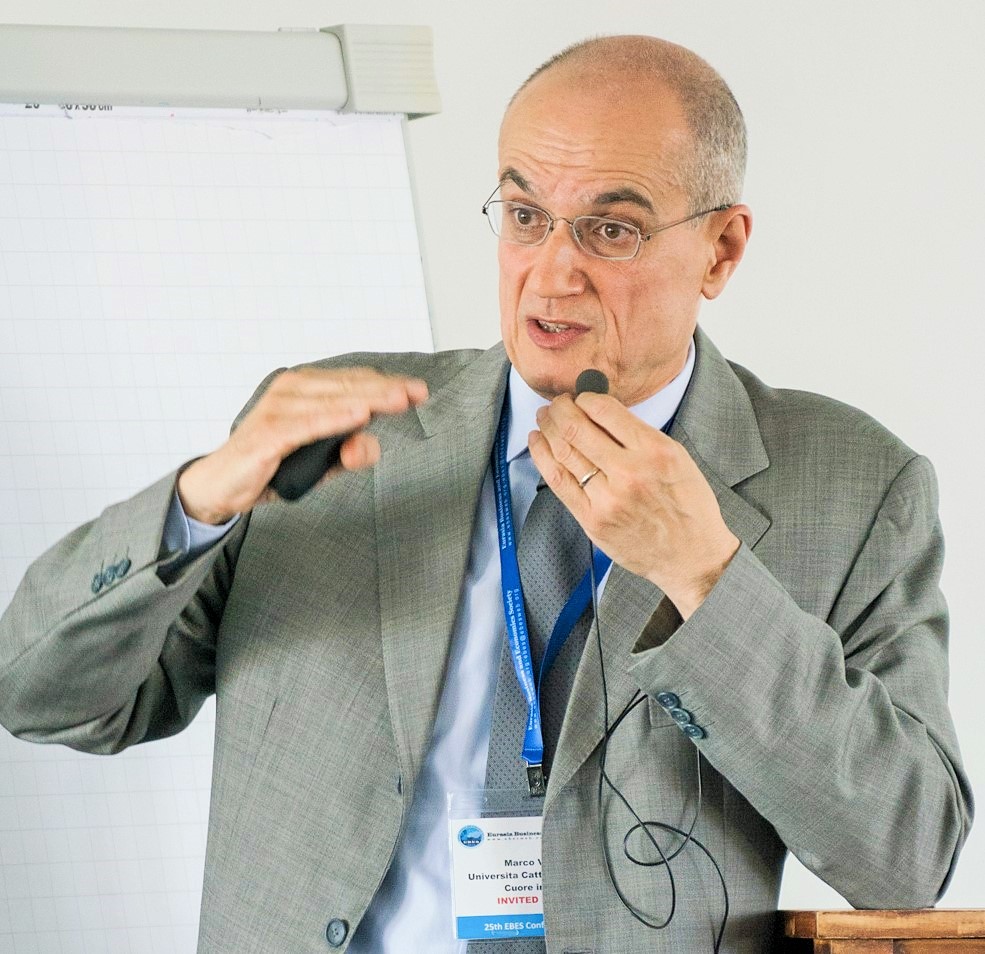
Marco Vivarelli, Professor at the Università Cattolica del Sacro Cuore in Milano and Director of the Department of Economic Policy
Le Wang, Chong K. Liew Chair and Professor & President’s Associates Presidential Professor, University of Oklahoma, USA
Klaus F. Zimmermann, Professor Emeritus, Bonn University, UNU-MERIT & President of GLO
GLO VirtYS Program Director:
Dr Olena Nizalova, Senior Research Fellow (Associate Professor) in Health Economics at the University of Kent and Director of the Q-StepProgram.
Program’s
Activities:
Virtual kick-off meeting of all the participants and Thematic Cluster advisors, who will be appointed by the participating Cluster leads to match closely participants’ research interests.
One-to-one activities with the Thematic Cluster Advisor will be agreed upon at the beginning of the scholarship period in an Individual Research Plan. These activities at a minimum shall include 2-3 virtual consultations, 1 review round of the completed research work and a discussion of the amendments (if needed) to follow up.
Provide a virtual platform for the GLO VirtYS program participants to present their findings and receive feedback from their peers and the GLO wider community.
The scholarship will conclude in June 2021, when the GLO Management Board will make a decision on whether to extend an invitation to the graduate of the GLO Virtual Scholar Program to join the organization as a GLO Fellow, based on the recommendation from their Thematic Cluster Advisors and evaluation of the GLO VirtYS Advisory Board.
Research
proposals are invited within one of the following GLO thematic clusters:
Involved: GLO Cluster Leads & the GLO VirtYS Program Director
Nick Drydakis
Almas Heshmati
Milena Nikolova
Olena Nizalova
Francesco Pastore
Kompal Sinha
Marco Vivarelli
Klaus F. Zimmermann
Benefits
to the GLO VYSP Scholars:
All GLO VirtYS program participants will be appointed GLO Affiliates, if they are not already, and receive a GLO Bio page.
GLO VirtYS program participants will be listed with pictures on the glabor.org website of the program.
Feedback on their research from leading researchers in the area of their interest.
Networking opportunities with researchers from other countries within the same area and beyond.
(Priority) access to GLO activities.
Interactions with the scholars of the cohort, program’s alumni, and the future cohorts.
Opportunity to promote own research via GLO channels.
Completed research paper ready for submission to the GLO Discussion Paper series.
Possibility of promotion to GLO Fellow after exceptional performance.
Eligibility
criteria:
Applicant must be either currently enrolled in a doctoral program or be within 2 years after graduation as evidenced by the letter from the degree awarding institution or a degree certificate.
Applicant must be at an advanced stage of the analysis of a specific research question within the corresponding GLO Thematic Cluster to which he/she is applying as evidenced by the submitted draft.
Applicant must be supported by a letter of endorsement from either one of the GLO Fellows or from the administration of one of the GLO supporting institutions.
The GLO Virtual Young Scholars will be selected by a Scientific Selection Committee consisting of the GLO VirtYS Program Director, GLO thematic cluster leads participating in the current year, and a member of the GLO Management Board.
The results of selection of the GLO VirtYS program will be posted on the GLO site www.glabor.org by September 20, 2020. Scholars will be notified via email. In the 2020-21 academic year we expect to select 5-7 scholars.
The final research paper should be submitted by June 30th, by 5 pm GMT.
Upon completion of the program and based on the quality of the produced research paper, some of the GLO VirtYS program graduates may be invited to become GLO Fellows and their paper accepted as a GLO Discussion Paper.
Evaluation
criteria for applications:
Research excellence (50 points)
Policy relevance of the research question in a local and/or global context (25 points).
Potential for capacity development (25 points; preference will be given to the applicants for which the GLO Young Scholars Program can bring the highest capacity development, compared to what the applicant would have achieved without being a GLO Young Scholar)
Application procedure:
Many
applicants apply in the last days before the submission deadline. To avoid last
minute problems, we ask applicants to
apply in advance. Applications received after the deadline or applications that
do not meet the requirements set out below will not be accepted.
To apply
please complete the online application form with three attachments:
1. Research proposal (maximum 2 pages including references, single-spaced, font size 12) should include the following information:
Formulation of the problem/ research question.
Research methodology (data and empirical approach).
(Potential) Practical/Policy implications.
Reference list.
2. 2-page CV
3. Transcript from the doctoral program or doctoral degree certificate
4. Letter of endorsement for the candidate and the research proposal from either one of the GLO fellows or from the administration of one of the GLO supporting institutions reflecting on the potential of the candidate to benefit from the Program and the merits of the research proposal.
Posted inNews, Research, Teaching|Comments Off on Call for Applications for the 2020-21 GLO Virtual Young Scholars Program (GLO VirtYS): Deadline August 20, 2020.
A new GLO Discussion Paper finds for Canada that remote work on a large scale does not lead to family violence.
The Global Labor Organization (GLO) is an independent, non-partisan and non-governmental organization that functions as an international network and virtual platform to stimulate global research, debate and collaboration.
Author Abstract: We study the impacts of COVID-19 on domestic violence and family stress. Our empirical analysis relies on a unique online survey, the Canadian Perspective Survey Series, which allows us to investigate the mechanisms through which COVID-19 may affect family stress and domestic violence. We find no evidence that changes in work arrangements are related to self-reported levels of family stress and violence in the home due to confinement, suggesting that remote work on a large scale does not lead to family violence. In contrast, we find that the inability to meet financial obligations and maintaining social ties significantly increase reported family stress and domestic violence. These findings are consistent with two alternative mechanisms: social isolation and decreased bargaining power for women. Last, we provide suggestive evidence that receiving financial relief does not mitigate the effect of financial worries on domestic violence and family stress. We conclude that targeted programs supporting victims of domestic violence may be more effective.
A new GLO Discussion Paper reviews key contributions to econometric analysis of human fertility in the last 20 years.
The Global Labor Organization (GLO) is an independent, non-partisan and non-governmental organization that functions as an international network and virtual platform to stimulate global research, debate and collaboration.
Author Abstract: This paper reviews some key contributions to econometric analysis of human fertility in the last 20 years, with special focus on discussion of prevailing econometric modeling strategies. We focus on the literature that highlights the role of the key drivers of the birth outcomes, including age at entry into motherhood, the number of children, and the time between births. Our overall approach is to highlight the use of single equation reduced form modelling, which has important advantages but has the limitation of typically being unable to shed light on detailed causal mechanisms through which exogenous factors such as birth control and infant mortality, and policy variables such as child allowances and tax incentives, impact fertility. Structural models that embed causal mechanisms explicitly are better suited for this objective. We start with a description of the subject matter, including a brief review of existing theories of fertility behavior and a detailed discussion of the sources of data that are available to the analyst. At this point we stress the intrinsic dynamic nature of fertility decisions and how such dynamics create data with empirical features that pose important challenges for modelling. Once the nature of the problem and the characteristics of the data are spelled out, we proceed to review the different econometric approaches that have been used for modelling fertility outcomes with cross-section and panel data.
Cited papers include:
Winkelmann, R. (1995). Duration dependence and dispersion in count-data models. Journal of Business & Economic Statistics, 13(4):467–474.
Winkelmann, R. and Zimmermann, K. (1994). Count data models for demographic data. Mathematical Population Studies, 4(3):205–221.
Winkelmann, R. and Zimmermann, K. F. (1991). A new approach for modeling economic count data. Economics Letters, 37(2):139–143.
Social media data have become a reliable source for research in particular when traditional sources are unavailable. This happens in particular within crises like the 2008 Financial Crisis and the 2020 Covid-19 Pandemic. Below list some of the original contributions to this literature. The studies were first “predicting” Obama using Google Trends. A seminal paper in 2009 was first using Google Trends to predict unemployment during the Financial Crisis. Other issues covered were detecting mortgage delinquencies, and health and well-being issues. The perspectives for research in social sciences were studied as well as the state of the art for unemployment predictions investigated.
Nikolaos Askitas and Klaus F. Zimmermann, The Internet as a Data Source for Advancement in Social Sciences, International Journal of Manpower 36 (2015), (1), 2-12. Pre-Publication Version.
Askitas, Nikos and Klaus F. Zimmermann, Detecting Mortgage Delinquencies, IZA Discussion Paper No. 5895 (2011). Available at SSRN: https://ssrn.com/abstract=1906198