WageIndicator movement celebrates 20 years of successful activities

The WageIndicator, Pauline Osse, the WageIndicator Foundation and all the teams in the participating countries celebrate 20 years of successful activities around the globe. The Glabor Labor Organization (GLO), affiliated with WageIndicator, takes this opportunity to congratulate a great institution that has contributed to global transparency, understanding and well-being. In an interview with GLO, the Director has answered a few questions about the organization, vision and work of WageIndicator.

The Interview
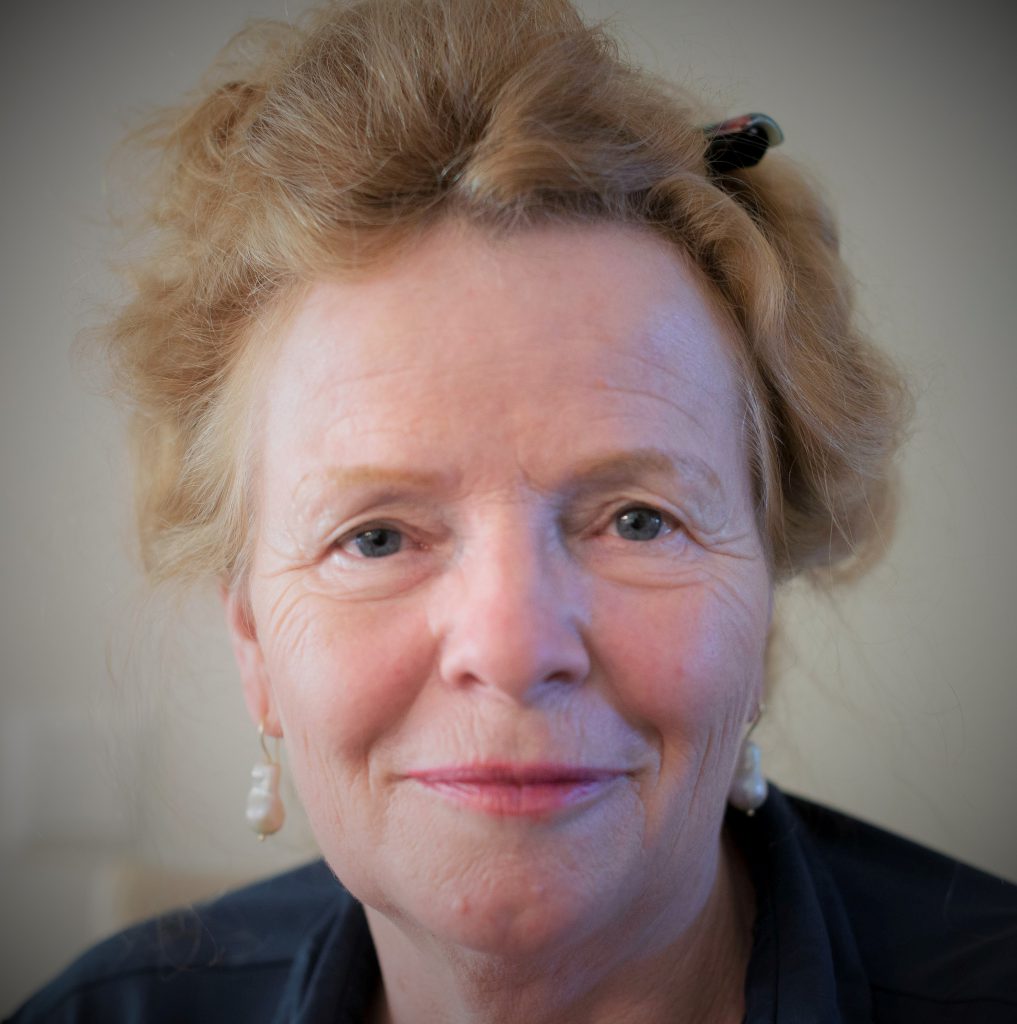
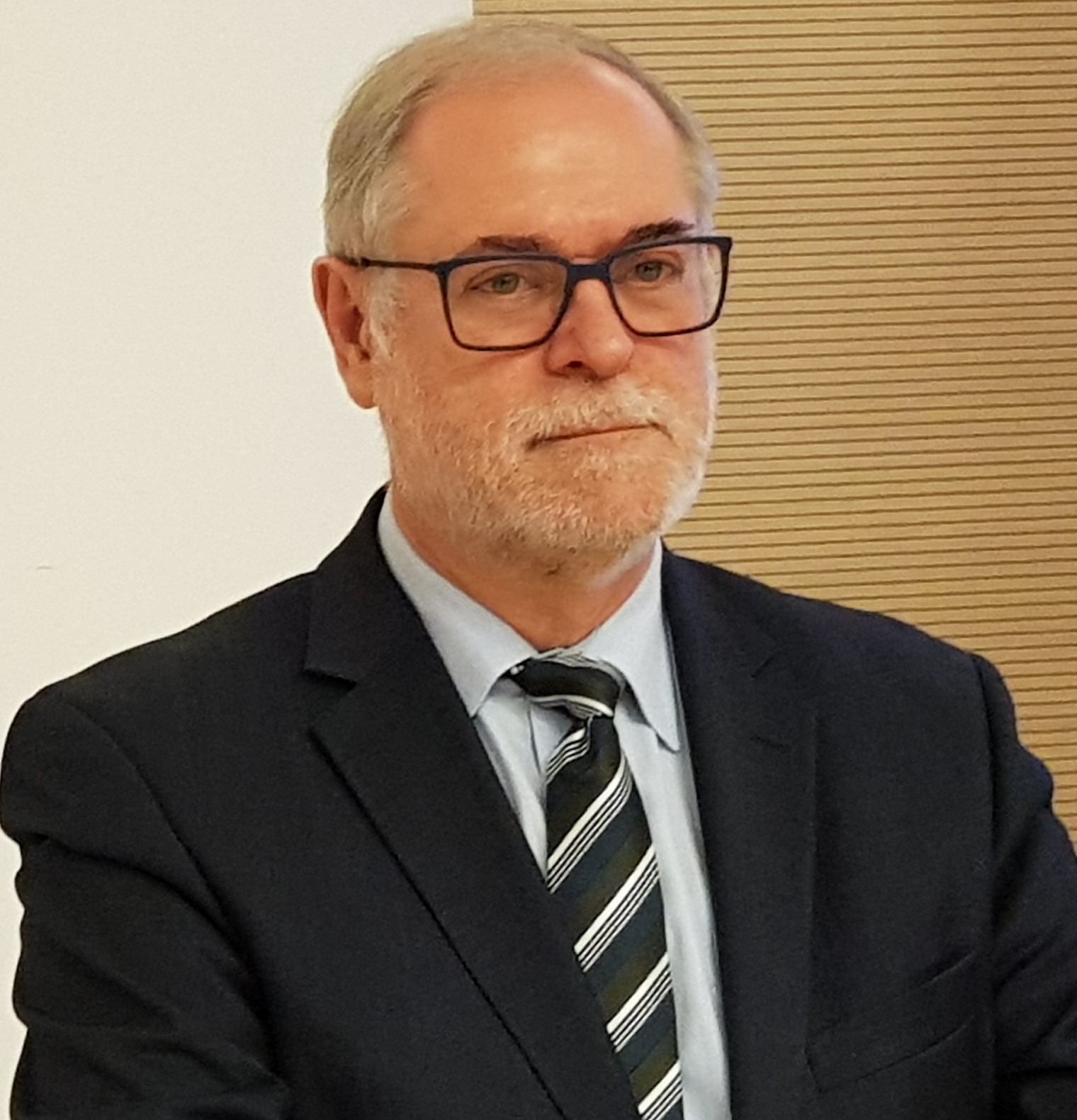
Pauline Osse

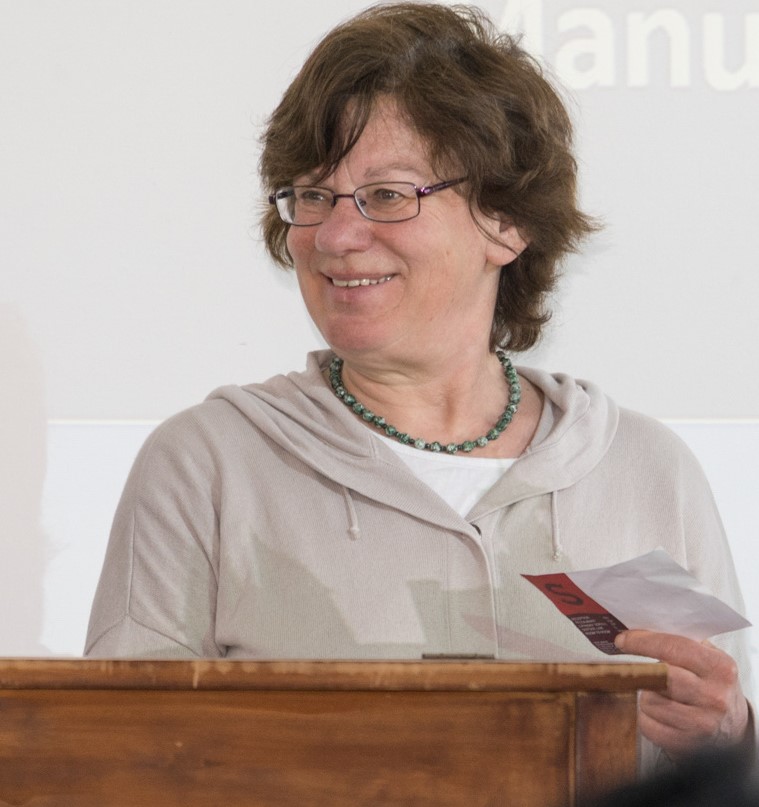
Director Pauline Osse has been a journalist for all her life. She worked for various magazines, the Dutch trade union and as a freelancer before she created the WageIndicator movement.

Now, the WageIndicator Foundation is a global player producing an international trademark.

In 2017, Pauline Osse and her organization were supporters of the newly created Global Labor Organization (GLO) from the first hour.

GLO: To collect wage microdata through the internet was quite innovative two decades ago. What was the origin of your initiative?

The first trigger was the insight that working people everywhere lacked access to adequate wage information. This became clear to me back in 1999 when I set up the website for the Dutch trade unions. People wanted to know ‘what should I earn, what can I ask, what is the going market rate for someone like me, trucker, cleaning lady?’ And the unions could not give that information. What the Collective Agreement said, yes, maybe, but not the real wage the market would pay. For the real wages one needed large scale research. And nobody did this for a lower level then CEO’s.

The second trigger was a small benchmark tool available online at the time for the Dutch highly educated white male employee. But what about me, a working women? And what about all the other working women, taking care for our children, houses, family? Why only information for the rich and highly educated? What about vulnerable groups at the lower end of the labor market? And indeed, what about labor markets in poorer countries? Why wasn’t there such a benchmark tool for everyone?

So I got in touch with Kea Tijdens, a specialist in gender studies at the University of Amsterdam and we sat together. Kea is great at designing surveys and knows how to structure data sets and handle microdata. I knew a bit about the internet already. We put 2 and 2 together and came up with our first online survey. It was 2000, the internet was still young. But it worked. The data we collected was enough to build a salary check, reflecting the real wages for specific occupations. We put our salary check online as a benchmark on a dedicated website and promoted it. This worked too. Ever since we have been refining and extending the salary check, the occupations covered, and the number of national websites. After 20 years – and over 100 countries –  the salary check is still very much at the core of our activities.

GLO: You are about to become a truly global player. What brought the breakthrough and what are the major products?

We did not stop at collecting microdata on real wages and – later – cost of living. Our websites today have much more to offer than just microdata. We offer statutory minimum wages, we have living wages for countries and regions within, we have a full text – and coded Collective Agreement-database and sample Collective Agreements to draw on, we have built and keep extending a country specific labor law database with tailor-made information on social security and the like, now covering 100 countries. Every step, every extension has been a response to what our web visitors told us they needed. The pressing problems of people we met in the field while doing offline research were also key in directing our work.

Our work essentially is piecemeal engineering, really. So it is difficult to pinpoint breakthroughs. But, as I remember it, a few moments stand out. Take for instance our first extension abroad. In 2004 we rolled out national WageIndicator websites in 9 European countries. All had a salary check, our prime product. That first extension abroad may be called a breakthrough: our idea worked there too!

By then we had already decided that every next step, every extension should be designed and constructed in such a way that all data was internally consistent and compatible. Right from the start every tool we use has been of our own making to make sure that all data and all information we elaborate adds up and is internationally comparable. All data is coded, all clauses are annotated. As a result of this early decision, today, as we speak, we run similar operations in over 100 countries. And we hope to serve people in 150 countries in 2020.

I also remember vividly Paraguay 2006. We met trade union members there, very poor people, and explained what we were doing. Their reaction was: what is this talk about minimum wage, maximum wage. The maximum here is the minimum wage, if we get it at all. And we don’t even know what the minimum is! If there ever was an eye opener, it was this one. So we started our collection of minimum wages and we started it in India, with its highly complex patchwork of minimum wages. Today, as a result, we offer the largest minimum wage database in the world within easy reach of everyone, anywhere, including Paraguay. On average each month 50,000 people consult our website there: in Paraguay alone! And a majority visit the minimum wage page first.

Around 2010 it became clear that living wage data was in great demand too. But how to come by living wages? What is a living wage? I thought that the best reference would have been the wages from Collective Agreements. If anything, that wage level should be enough to guarantee a decent living. If one supposed that the legal minimum wage was too low, then one might use the Collective Agreement-wages as a benchmark to eventually arrive at living wages. We should therefore offer a simple negotiating tool, based on existing Collective Agreements. This internal discussion resulted in two databases that we added to our salary check, minimum wages and labor law database: a living wage concept of our own design and a Collective Agreement-database from which we derive sample Collective Agreements.

Which brings me to our Decent Work Check. It is based on labor law and has been inspired by people’s pressing needs. During 2007 and 2008 in a dozen or so countries in Latin America, East and West Africa we organized fact finding sessions in remote rural areas. In order to structure the debate we handed out a small questionnaire. It took participants a few minutes to fill out by ticking multiple choice boxes. The answers added up to a score. This score told them right away where they stood in terms of compliance with working conditions as in their national labor law. Ten years later this tried and tested tool has been used to create a factory-level survey for both Indonesia and Ethiopia, where it has been applied to conduct face-to-face interviews with workers and hr-staff in the garment sector. After consultation with factory owners the compliance-with-the-law-results are published as factory pages on our national websites in those two countries. The factory pages are seen as so called Worker Driven Social Responsibility.  

GLO: Nowadays, WageIndicator is a trademark. But it is not protected, so how do you survive?

Well, I don’t know about the trademark, I couldn’t tell. But in Holland, after 20 years, we surely are a household-name. And we know that our data is widely drawn upon and used by policy makers, many small employers, multinationals, journalists and academics. Even after 20 years, we stick to our policy of putting all our data online as soon as we have double checked that it is accurate, factual and up to date. We just have to offer more than others, be faster, better and transparent.

We always try to come up with creative answers to people’s questions, even like: if you can do this, can you also do that? Such questions also come from governments and multinationals, but these don’t pay always. They simply assume that the data we publish is for free, since it is published. Doing projects together is one way to raise income. Selling data another.

GLO: Your venture has limited funds. So one does not get rich working for WageIndicator. How do you keep the spirit alive?

We want our data to reach as many people as possible. We are motivated by the urge to liberate the ordinary working women and men through empowerment by providing them with clear cut information that helps them in taking their own decisions. To never take no for an answer. So that they no longer depend on their parents, the trade union, the government or any other authority to tell them what is possible and what not.

This questioning reflex surely comes from journalism, my trade. Why don’t workers automatically get the information from the Collective Agreements concluded on their behalf, why do we have to unearth legal minimum wage information and decipher labor law? Why is is not made accessible in understandable language in the first place? This information belongs to the people, by definition. It is unfair to keep it from them. The way we present it makes them say: ah, now I understand what is in the law for me, finally. And: I feel respected, thank you for that. This certainly motivates our team.

We are an internet-based micro multinational. Our team spirit is highly entrepreneurial. We are builders. The gender angle that has been with us from the beginning is reflected in the composition of our global team. Most have children. We make our own creative flow. If we have the money, we invest in improvement and extension. If we have less money we continue building and updating anyhow. You can also look at us as a family enterprise. Even when some cherished team members leave us, because of an attractive job offer elsewhere, they keep in touch with the family, and continue with us by offering coaching and mentorship for free, for ever. They stay with us in the same spirit. We are all about diversity and inclusion. And the fact that in our daily work we do something meaningful to liberate simple working people by giving them the information they need, is a binding force as well.

GLO: What next innovations may we expect?

Perfect websites, perfect databases in 150 countries, many countries with good Collective Agreement databases, factory pages giving overviews of compliance with the labor law. And a platform with social protection tools for the platform workers.

The interviewer from GLO has been Klaus F. Zimmermann.

The Scientific coordinator of WageIndicator is GLO Fellow Kea Tijdens

Kea Tijdens
Share and Compare Wages, Labor Laws and Career

Ends;

Posted in Interview, Media, Research | Tagged | Comments Off on WageIndicator movement celebrates 20 years of successful activities

#Brexit has become a cliffhanger! But both most likely outcomes of the challenge may also bring long-term chances.

Many people think that a leave of the UK from the European Union is something like the largest mistake in a lifetime after decades of European integration efforts. Still there is hope that the Brits could correct the decision in a second referendum. After the rejected Brexit deal of Theresa May in the British Parliament, such hopes became stronger.

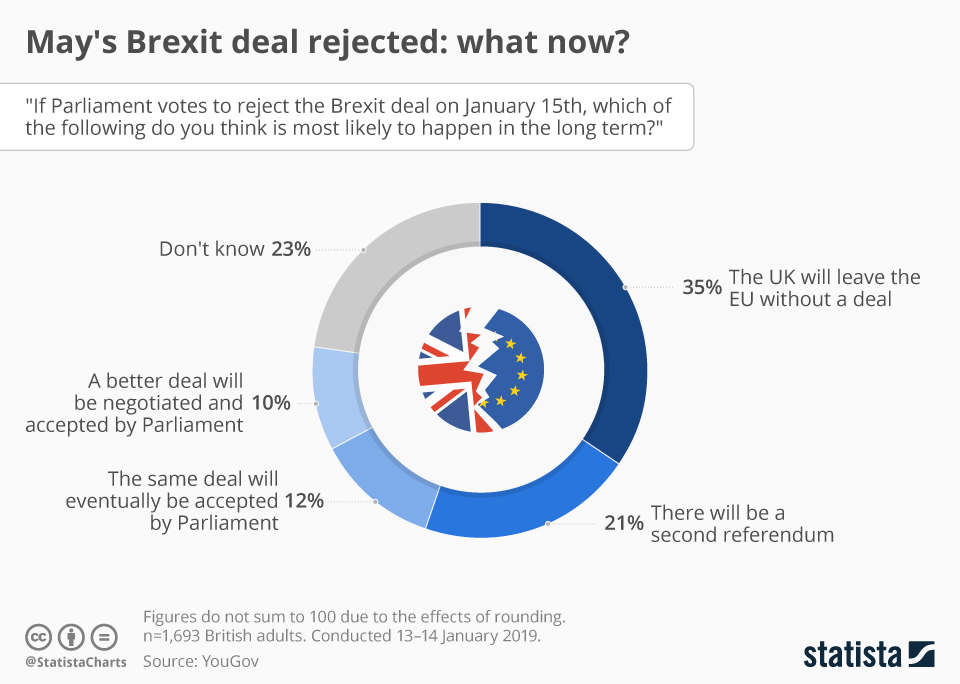
A recent survey among 1,693 adults in the UK has investigated the options for the situation after a rejection of May’s Brexit deal in the British parliament. The “no-deal”, cold Brexit is expected by 35%, while a “second referendum” ranks only third with 21% behind 23% for “don’t know”. This means that the chances are low. How big is the disaster?

Reference Link.

Klaus F. Zimmermann

Klaus F. Zimmermann is Professor Emeritus of Bonn University, Honorary Professor of Maastricht University, the Free University of Berlin and Renmin University of China, Beijing. He is Co-Director of POP at UNU-MERIT, Maastricht, and President of the Global Labor Organization (GLO).

Interview

GLO: Are you surprised about the large rejection of the Brexit deal?

Klaus F. Zimmermann: Yes, this is kind of a Kamikaze behavior, untypical for a Parliament at fairly normal times. It has been know that the British MPs are quite critical about the EU, and the UK was never a friend of a political union in Europe. An acceptance of the May deal with the EU would have finalized the move out on March 29, at least on paper. Once out, one could have acted more radical. Now those responsible have to fear that the potentially large damage of a cold Brexit generates a stronger desire for a second referendum.

GLO: What do you expect to happen now, general elections, a new referendum, a cold Brexit, or else?

Klaus F. Zimmermann: Now Theresa May wants to speak with all sides among the MPs. This seems a bit too late. Everybody in the Parliament fears general elections, not even the labor party can be sure to win in such a divided situation. The country is split in two nearly equal blocks with opposite positions. It is not even obvious that a second referendum will bring a strong majority for one side. Hence, my best guess is that the outcome is a cold Brexit. However, I think that this would be really a big problem. With such an important decision with very long-term consequences for the well – being of the people it is not a shame to think twice and to correct a mistake.

GLO: What are the consequences for Europe?

Klaus F. Zimmermann: Never waste a crisis! Europe has better things to do, but forced to adjust there are two potentials: First, in the likely case of a cold Brexit, the damage for the UK will be substantial, and also the remaining EU will suffer. At least Scotland will try to leave the UK and seek to join the EU. This will signal to the 27 member states that it does not pay to leave. Further, it increases the incentives to develop the EU stronger and faster, in particular since the UK was always hesitant about a stronger political and economic integration and can no longer object. Second, if a cold Brexit does not happen because the British MPs fear the consequences, another referendum is likely. It can lead to a “Remain” and start a cultural change in the UK, where the British people better understand the benefits of the larger European Union. The EU could then be more dynamic than it otherwise would have been.

See GLO Website of January 18, 2019.

Ends;

Posted in Interview, Media, Policy | Tagged | Comments Off on #Brexit has become a cliffhanger! But both most likely outcomes of the challenge may also bring long-term chances.

After the Brexit vote: Martin Kahanec of the Central European University of Budapest analyzes the consequences for the European continent, and Eastern Europe in particular.

Stability in a dramatic phase of instability: Theresa May remains Prime Minister in a parliamentary vote the day after she has experienced “the largest defeat for a sitting government in history” on her Brexit deal with the EU in the British Parliament on Tuesday night (January 15, 2019). The country is deeply divided, the political system looks like a lame duck. What are the consequences for continental Europe?

Some people argue that the Brexit situation and the uncertainty will also harm the countries on the European continent. Martin Kahanec has written many scientific contributions and policy briefs on the European integration and the role of migration in particular from Eastern Europe. His early insights matter a lot at this stage of the Brexit process.

Martin Kahanec is a Professor and Head of the School of Public Policy at the Central European University in Budapest. He is Founder and Scientific Director of CELSI, Bratislava, a Chairperson of the Slovak Economic Association and Fellow of the Global Labor Organization (GLO).

The Interview

KFZ: Are you surprised about the large rejection of the Brexit deal?

Martin Kahanec: The landslide is perhaps a bit surprising, but there are several well-defined groups who had every reason to vote against the Brexit deal. One group are those, mainly from the Labor camp, who oppose May, or saw a “nay” as the only way to have a second referendum, or both. Among those who wish for a second referendum are probably a good number of conservatives, too. The other group is composed of those, primarily conservatives, who consider it a bad deal, not protecting the UK’s interests adequately. And then there is the DUP, who oppose the Northern Ireland backstop. It is hard to imagine a deal that would be accepted by some majority in the House of Commons and by the 27 EU member states as well, and with May investing very little in cross-party consensus building, the “nay” result was to be expected.

KFZ: What do you expect to happen now, general elections, a new referendum, a cold Brexit, or else?

Martin Kahanec: I have no crystal ball. I hope for a new referendum, resulting in the UK remaining in the EU. With Corbyn as a staunch Brexiter at the helm of Labor, one important question is what is needed for him to reflect on the preferences of the majority of his party’s constituency, and turn Labor determinedly in favor of Remain. Whereas postponing Brexit by several months can give some time for what I see as forces of reason to take their effects, I am also afraid that a prolonged agony may further deepen the cleavages and sharpen the tensions in the British society, furthering its polarization, and leaving little space for consensus building. But a cross-party consensus, and strong leadership of the Speaker of the House, are very much needed to avoid a crash-Brexit and explore the options for a new deal or a second, possibly binding referendum.

KFZ: What are the consequences for Europe?

Martin Kahanec: On the one hand, the rejection of the deal is a lifeline for Remain hopes. On the other hand, the ultimate outcome is as unclear as ever. This uncertainty is very unhelpful for the European economy. If the UK leaves the EU, the economic consequences for the EU (and even more so for the UK) will be very much on the negative side. In particular, it will be a major challenge for the eastern member states of the EU. Hundreds of thousands of eastern Europeans work in the UK. Some of them will consider returning to their home countries. As they are primarily young, and have acquired many hard and soft skills in the UK, their return would help the labor markets and public budgets back home. However, they would likely be less productive in their home countries than in the UK, and so their incomes would go down. This and the reduced interstate mobility would also decrease productivity in Europe and hurt its capacity to absorb economic shocks. An abrupt return of large numbers of workers to the sending countries could exceed the capacity of their labor markets, social security and health care systems, and social services to absorb them, creating temporary congestion and resulting in tensions between returnees and their compatriots. The UK will also be hurt: it will lose many thousands of skilled, hard working men and women and talented students from eastern Europe. The UK is also a major trading partner and source of investment for the eastern member states. Brexit would significantly reduce the gains from that trade and investment for both parties. 

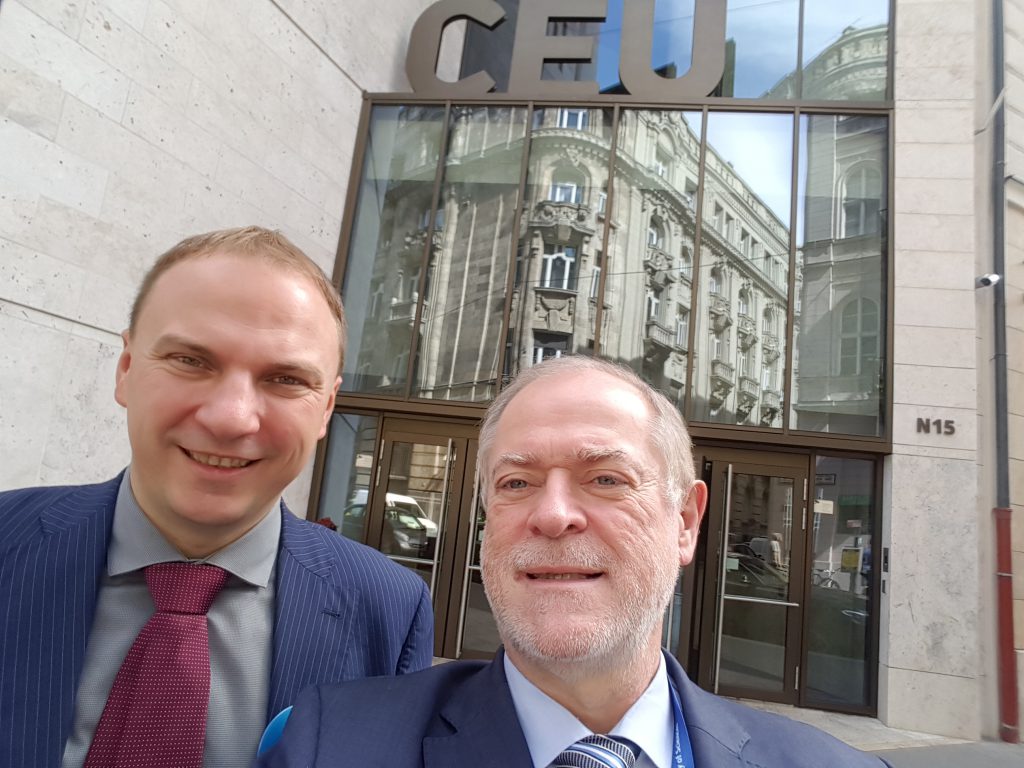
Martin Kahanec (left) and Klaus F. Zimmermann in front of the Central European University in Budapest

Note: KFZ here is Klaus F. Zimmermann, UNU-MERIT, Maastricht University and President of the Global Labor Organization (GLO).

Ends;

Posted in Interview, News, Policy | Tagged , , , | Comments Off on After the Brexit vote: Martin Kahanec of the Central European University of Budapest analyzes the consequences for the European continent, and Eastern Europe in particular.

Coventry, United Kingdom: 28th EBES Conference.

28th EBES Conference. May 29-31, 2019 in Coventry, United Kingdom
Hosted by the Centre for Financial and Corporate Integrity (CFCI), Coventry University
. Supported by the Global Labor Organization (GLO)

Interested researchers are cordially invited to submit abstracts or papers for presentation consideration at the 28th EBES Conference in Coventry. It will take place on May 29th, 30th, and 31st, 2019 at Coventry University in Coventry, United Kingdom. The conference will be organized with the support of the Istanbul Economic Research Association and will be hosted by the Centre for Financial and Corporate Integrity (CFCI) in collaboration with the Coventry Business School Trading Floor. To support the event, the Global Labor Organization (GLO) will organize three invited paper sessions.

Invited Speakers are David B. Audretsch, Marco Vivarelli and Klaus F. Zimmermann.

David B. Audretsch is a Distinguished Professor at Indiana University, where he also serves as Director of the Institute for Development Strategies. He is an Honorary Professor of Industrial Economics and Entrepreneurship at the WHU-Otto Beisheim School of Management in Germany and a Research Fellow of the CEPR in London. He has also worked as a consultant to the UN, World Bank, OECD, EU Commission, and U.S. Federal Trade Commission. Prof. Audretsch’s research has focused on the links between entrepreneurship, government policy, innovation, economic development, and global competitiveness. He is co-author of The Seven Secrets of Germany (Oxford University Press) along with several other books. He is co-founder and Editor-in-Chief of Small Business Economics: An Entrepreneurship Journal and many other journals. He was awarded the Global Award for Entrepreneurship Research by the Swedish Entrepreneurship Forum (Entreprenörskapsforum). He has received honorary doctorate degrees from the University of Augsburg in Germany and Jonköping University in Sweden. Prof. Audretsch was also awarded the Schumpeter Prize from the University of Wuppertal in Germany. He has served as an advisory board member to a number of international research and policy institutes, including Chair of the Deutsches Institut für Wirtschaftsforschung Berlin(German Institute for Economic Analysis Berlin), Chair of the Stifterverband für die Deutsche Wissenschaft (Foundation for the Promotion of German Science) in Berlin, Germany, and the Center for European Economic Research (Zentrum für Europäische Wirtschaftsforschung) in Mannheim, Germany etc. He has authored numerous papers which were published in prestigious journals such as American Economic Review, European Economic Review, Review of Economics and Statistics, and Journal of Management and his researches have been cited more than 77,000 (Google Scholar). He holds a PhD in economics from University of Wisconsin, Madison in U.S.A.

Marco Vivarelli, Ph.D. in Economics and Ph.D. in Science and Technology Policy, is full professor at the Catholic University of Milano, where he is also Director of the Institute of Economic Policy. He is Professorial Fellow at UNU-MERIT, Maastricht; Research Fellow at IZA, Bonn; Fellow of the Global Labor Organization (GLO). He is member of the Scientific Executive Board of the Eurasia Business and Economics Society (EBES, Istanbul); member of the Scientific Advisory Board of the Austrian Institute of Economic Research (WIFO, Vienna) and has been scientific consultant for the International Labour Office (ILO), World Bank (WB), the Inter-American Development Bank (IDB), the United Nations Industrial Development Organization (UNIDO) and the European Commission. He is Editor-in-Chief of the Eurasian Business Review, Editor of Small Business Economics, Associate Editor of Industrial and Corporate Change, Associate Editor of Economics E-Journal, member of the Editorial Board of Sustainability and he has served as referee for more than 70 international journals. He is author/editor of various books and his papers have been published in journals such as Cambridge Journal of Economics, Canadian Journal of Economics, Economics Letters, Industrial and Corporate Change, International Journal of Industrial Organization, Journal of Economics, Journal of Evolutionary Economics, Journal of Productivity Analysis, Labour Economics, Oxford Bulletin of Economics and Statistics, Regional Studies, Research Policy, Small Business Economics, Southern Economic Journal, World Bank Research Observer, World Development. His current research interests include the relationship between innovation, employment and skills; the labor market and income distribution impacts of globalization; the entry and post-entry performance of newborn firms.

Abstract/Paper Submission: Authors are invited to submit their abstracts or papers no later than February 28, 2018. For submission, please visit the EBES website at https://www.ebesweb.org/Conferences/28th-EBES-Conference-Coventry/Abstract-Submission.aspx. No submission fee is required. General inquiries regarding the call for papers should be directed to ebes@ebesweb.org.

Publication Opportunities: Qualified papers can be published (after refereeing) in the EBES journals (no submission and publication fees). EBES journals (Eurasian Business Review and Eurasian Economic Review) are published by Springer Nature and indexed by SCOPUS, EBSCO EconLit with Full Text, Google Scholar, ABI/INFORM, ABS Academic Journal Quality Guide, CNKI, EBSCO Business Source, EBSCO Discovery Service, EBSCO TOC Premier, Emerging Sources Citation Index (Clarivate Analytics), International Bibliography of the Social Sciences (IBSS), OCLC, ProQuest Business Premium Collection, ProQuest Central, ProQuest Turkey Database, Research Papers in Economics (RePEc), Summon by ProQuest, Cabell’s Directory, and Ulrich’s Periodicals Directory.

Furthermore, qualified papers after review will be recommended to be considered for publication in regular issues of the Journal of Corporate Finance after a review process. However, presentation at the EBES Conference does not guarantee publication in the Journal of Corporate Finance.

Also all accepted abstracts will be published electronically in the Conference Program and the Abstract Book (with an ISBN number). It will be distributed to all conference participants at the conference via USB. Although submitting full papers are not required, all the submitted full papers will also be included in the conference proceedings in the USB. After the conference, participants will also have the opportunity to send their paper to be published in the Springer’s series Eurasian Studies in Business and Economics (no submission and publication fees).

This will also be sent to Clarivate Analytics in order to be reviewed for coverage in the Conference Proceedings Citation Index – Social Science & Humanities (CPCI-SSH). Please note that the 10th, 11th, 12th, 13th, 14th, 15th, 16th, 17th and 19th EBES Conference Proceedings were accepted for inclusion in the Conference Proceedings Citation Index – Social Science & Humanities (CPCI-SSH). 18th, 20th and subsequent conference proceedings are in progress.

Important Dates
Abstract Submission Deadline: February 28, 2019
Decision Communicated by: March 8, 2019*
Registration Deadline: April 19, 2019
Announcement of the Program: April 30, 2019
Paper Submission Deadline (Optional): April 19, 2019**
Paper Submission for the EBES journals: July 31, 2019
* The decision regarding the acceptance/rejection of each abstract/paper will be communicated with the corresponding author within a week of submission.
** Full paper submission is optional. If you want to be considered for the Best Paper Award or your full paper to be included in the conference proceedings in the USB, after submitting your abstract before February 28, 2018, you must also submit your completed (full) paper by April 19, 2019.

Contact: Ugur Can (ebes@ebesweb.org); Ender Demir (demir@ebesweb.org)

Ends;

Posted in Events, Research | Comments Off on Coventry, United Kingdom: 28th EBES Conference.

Quo vadis, Brexit? Economics Professor Jonathan Portes has some first answers.

A majority of 230 votes in the British Parliament has rejected the Brexit deal of Theresa May with the EU late evening of Tuesday (January 15, 2019). This has been called by BBC as “the largest defeat for a sitting government in history”.

While some now expect a hard Brexit without a transition phase others push for a second referendum to reverse the Brexit vote. Jonathan Portes is a long-term analyst of the Brexit vote, and has warned early about its dangers. He has published many research articles and policy briefs on the matter. His early insights matter so much about this challenge for the long-term well being of Europe.

Jonathan Portes is Professor of Economics and Public Policy, Senior Fellow, UK in a Changing Europe, King’s College, London, and Fellow of the Global Labor Organization (GLO).

The Interview

KFZ: Are you surprised about the large rejection of the Brexit deal?

Jonathan Portes: Yes. Few expected quite such a heavy defeat – more than half of Conservative backbenchers rejected it as did almost the entire Parliamentary Labour Party. But the key is that while there was a huge majority against the deal, there is no majority for any particular alternative. Most Conservatives who voted against did so because they prefer No Deal, or think the EU27 will agree under the threat of No Deal to remove the so-called backstop. But most Labour MPs voted against because they want a permanent customs union, Single Market membership, or to remain in the EU.

KFZ: What do you expect to happen now, general elections, a new referendum, a cold Brexit, or else?

Jonathan Portes: Nobody knows. The vote clearly increases the probability of No Deal – it also increases the probability of a second referendum. The key is whether the majority in Parliament that rejects No Deal will be able to decide on a single way forward, whether that’s Single Market membership/the “Norway option” or a second referendum. And that will depend on whether enough Conservative MPs are prepared to defy the strong views of their own membership and the obstinacy of Theresa May, who so far has proved entirely unwilling to seek a cross-party compromise.

KFZ: What are the consequences for Europe?

Jonathan Portes: The EU27 can do little except wait for the UK to sort itself out. There is little point in making minor changes to the deal on the table when the UK is so divided. We simply are not currently in a position to negotiate in a credible way. The sensible thing for the EU to do is to continue to prepare for No Deal, while being prepared to response positively when the UK – perhaps under a different Prime Minister or government – actually demonstrates that there is a Parliamentary majority for a specific way forward, particularly if it involves extending Article 50 to allow a second referendum, a general election, or some other process.

Note: KFZ here is Klaus F. Zimmermann, UNU-MERIT, Maastricht University and President of the Global Labor Organization (GLO).

Ends;

Posted in Events, Interview, News, Policy | Tagged | Comments Off on Quo vadis, Brexit? Economics Professor Jonathan Portes has some first answers.

Nauro Campus on the #Brexit disaster of the UK in the British Parliament on January 15, 2019

The Brexit deal of Theresa May with the EU was rejected by the UK MPs late evening of Tuesday (January 15, 2019) by a majority of 230 votes. Two hours after the decision, prominent economist Nauro Campus provided us with his first reflections on this.

Nauro Campos, Professor of Economics at Brunel University London, Fellow of the Global Labor Organization (GLO) and Research Professor at ETH-Zürich, is a also the Editor of the influential research journal Comparative Economic Studies.

Nauro Campos

KFZ: Are you surprised about the large rejection of the Brexit deal?

Nauro Campos: The most surprising thing in UK politics this week is how everything (so far) has occurred as predicted. Before the vote, there was certainty about the defeat but questions about its extent. At the lower-end, the estimated margin was about 160 votes (which would already make it a “historic defeat.”) SkyNews I believe held the upper-end with a defeat by about 225 votes. Thus 230 votes would be shocking only to those that don’t follow the debate closely (and it has been such a repetitive, shallow and infuriating debate that there are indeed many good reasons not to follow it.) 

KFZ: What do you expect to happen now, general elections, a new referendum, a cold Brexit, or else?

Nauro Campos: I am writing this less than two hours after the result from the vote so, if
predictability will rule this week in Westminster (for a change), than the prime minister will win the vote of no confidence tomorrow closing down a main avenue for a general election. Immediately after voting down the piece of legislation that gives May’s government the reason to be, the DUP (and one should soon expect the rest of the Conservative rebels to come along) said that tomorrow they will show themselves confident, instead. Clearly, it doesn’t matter confident in what. This is the stuff of populism and has been so for the last three years. A hard Brexit seems less likely this week but which of the other options may prevail (second referendum, revocation or extension of A50) should be easier to gauge this time on Monday (after the Prime Minister goes back to parliament with details of her proposed Plan B.)

KFZ: What are the consequences for Europe?

Nauro Campos: I guess Europe will continue to do what it has been doing in the last few months regarding Brexit, namely, (1) to wait for Westminster to come to terms with the agreements it signed in December 2017 at the end of phase 1 of the negotiations and (2)  continue to prepare for the worse case scenario (a no deal) but confidently showing that it is much better prepared for it than the UK currently is.

Note: KFZ is Klaus F. Zimmermann, UNU-MERIT, Maastricht University and President of the Global Labor Organization.

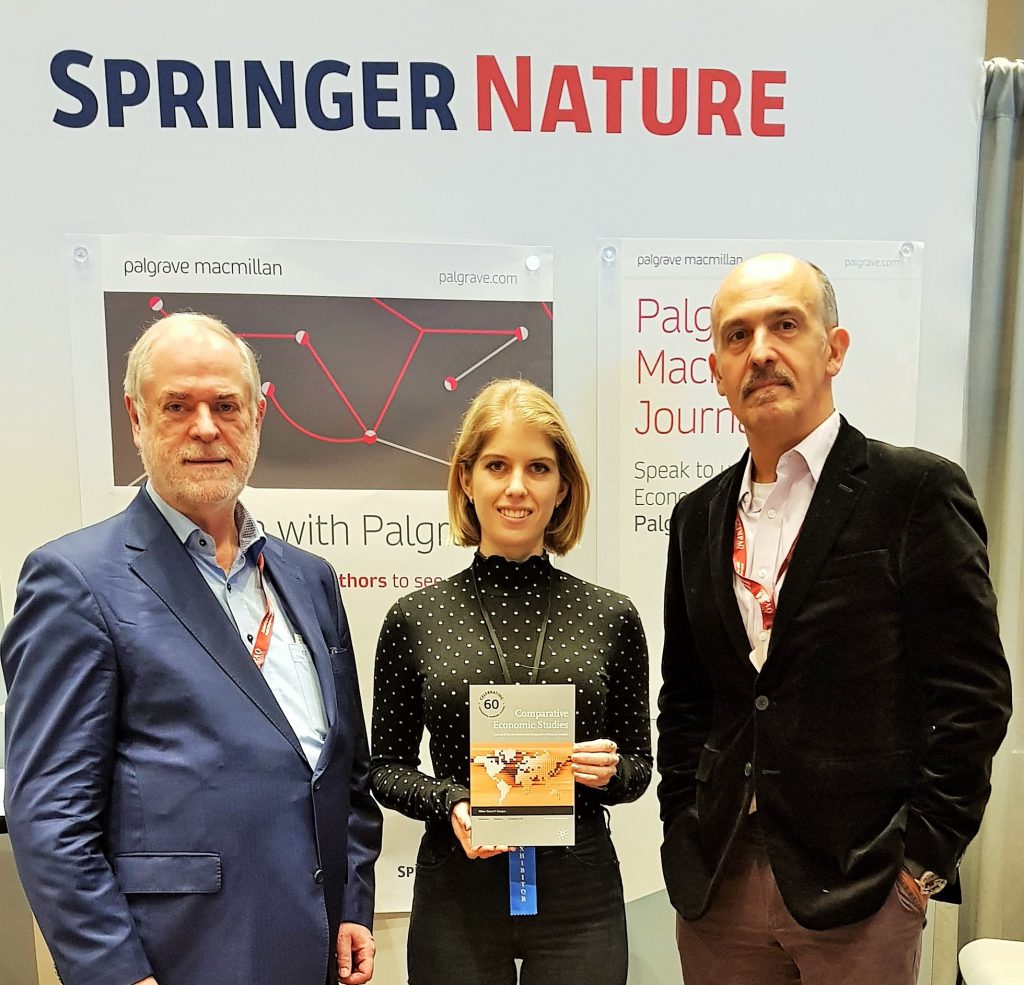
Right: Zimmermann and Campos with Katie Hall, Associate Editor at Palgrave Macmillan & Springer Nature at the ASSA 2019 Conference in Atlanta.

Posted in Interview, News, Policy | Tagged , | Comments Off on Nauro Campus on the #Brexit disaster of the UK in the British Parliament on January 15, 2019

Challenges for Economic Growth. Research Conference hosted by Transilvania University of Brasov.

The Faculty of Economic Sciences and Business Administration within Transilvania University of Brasov, in collaboration with the Institute for Economic Forecasting of the Romanian Academy cordially invites you to submit research papers for presentation and discussions at the third edition of the International Conference „Inclusive and sustainable economic growth. Challenges, measures and solutions” (ISEG 2019). The 2019 event is supported by the Global Labor Organization (GLO).

The conference will be hosted by Transilvania University of Brasov and will be held 31 May-1 June 2019 in the Transilvania University Hall, Street Iuliu Maniu no. 47A, Brasov.

The keynote speakers of the 2019 ISEG conference are:

Klaus F. Zimmermann, President of the Global Labor Organization (GLO); Co-Director of POP at UNU-MERIT; Full Professor of Economics at Bonn University; Honorary Professor, Maastricht University, Free University of Berlin and Renmin University of China, Beijing.

Filomena Maggino, Full Professor at Sapienza University of Rome; Editor-in-Chief of Social Indicators Research (Springer); Counsellor – Prime Minister Office – Italian Government (Conte’s cabinet); Editor-in-Chief of Encyclopedia of Quality of Life and Well-being Research; Past-President of the International Society for Quality Of Life Studies; President of the Italian Association for Quality of Life Studies.

The meeting will be an excellent opportunity for academics, researchers and doctoral students to present new research results and to discuss challenging issues on the topics of conference. The aim of this new series of conferences is to gather research interests and to stimulate collaborative research around actual macro- and microeconomic topics (as suggested below).

Topics:

We are inviting submissions of both empirical and theoretical work that fits into the conference topics. Being a multi- and interdisciplinary conference, we encourage submission of papers in the following broad research areas: economics, finance, marketing and management. Examples of suitable topics:

  • Economic growth and convergence perspectives in the European Union: Measurement methods and new empirical evidence
  • Public and Private Finance Sustainability in the Context of Current Economic Challenges
  • Issues and challenges in the Romanian higher education
  • Challenges and prospects of economic growth in South Eastern Europe
  • New inequalities, multidimensionality and growth pro-poorness
  • Business for sustainable development
  • New approaches in marketing and management

Submission

Deadline for abstract submission is 1st of March, 2019, and for full paper submission is May 15th, 2019. Authors of accepted abstracts will be informed by the 1st of April, 2019.

Please submit your abstracts and full papers through the conference website!

Publication opportunities

All papers must be written and presented in English. A blind review process apply to all submissions. During the conference, one discussant will be assigned to each paper.

Accepted papers will be included in the conference proceedings volume, which will be sent for being indexed by ISI Proceedings volume (CPCI – Conference Proceedings Citation Index) under Clarivate Analytics (or former Thomson Reuters).

Selected papers from the conference may be subsequently published in one of the following journals, subject to the agreement and decision of editors:

Romanian Journal of Economic Forecasting

Journal of Smart Economic Growth

Bulletin of the Transilvania University of Brasov

Registration

The conference fee is 100 euro for each paper. The conference fee must be paid until the 26th of April by bank transfer, according to the indications which will be posted on the conference website. The fee covers the book of abstracts, the attendance certificate, as well as the access to all conference sessions, coffee breaks, lunch and festive dinner.

Best paper award

The “Best Paper Award” is granted to the best paper in the conference. Junior researchers are particularly encouraged to submit papers.

Updated information about the conference program, the organizing and scientific committees, and other related information will be posted on the conference website: http://unitbv.ro/iseg/

For any information related to the conference, please contact us: monica.szeles@unitbv.ro

Ends;

Posted in Events, News, Research | Comments Off on Challenges for Economic Growth. Research Conference hosted by Transilvania University of Brasov.

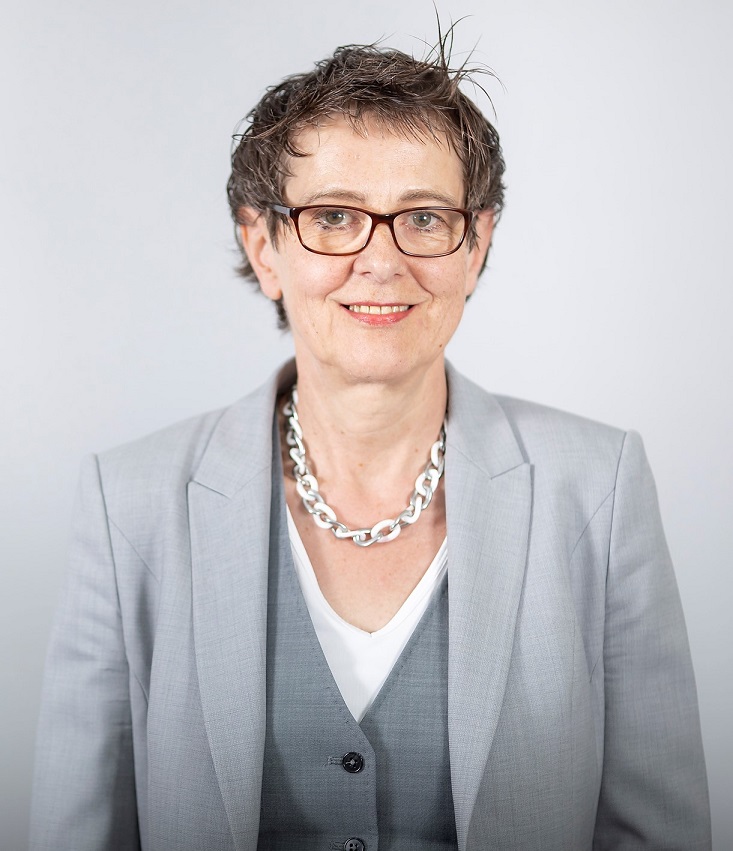
Dorothea Schäfer is the new Editor-in-Chief of the Eurasian Economic Review. Interview with her about her publication perspectives in the area of labor economics.

As of January 2019, the Eurasian Economic Review (EAER) has a new Editor-in-Chief, Dorothea Schäfer. EAER is one of the flagship journals of the Eurasia Business and Economics Society (EBES), which partners with the Global Labor Organization (GLO). Under the leadership of Schäfer, the EAER, while focusing on macro analysis and financial markets in general, also seeks to attract high quality research papers in macro labor and on the interrelationships between financial and labor markets. Klaus F. Zimmermann asked Dorothea Schäfer about her plans in a GLO Interview.

GLO: In your new role as Editor-in-Chief, where do you see the focus of the EAER under your leadership?

Dorothea Schäfer: The focus of EAER will be on financial markets and applied macro research. The journal has a broad scope in both focus areas. Finance topics may address such issues as financial systems and regulation, corporate and start-up finance, macro and sustainable finance, finance and innovations, consumer finance, public policies within local, regional, national and international contexts towards financial markets, money and banking and the interface of labor and financial economics. Macro economic research includes topics from monetary economics, labor economics, international economics and development economics, preferably but not exclusively, with a link to finance. Typically, the articles published in EAER highlight the economic, political and societal relevance of research results.

GLO: The challenges for the well-being of the world are not smaller today, than after the Great Recession. What can a journal like the EAER contribute to deal with those challenges?

Dorothea Schäfer: Asian countries were exposed to a deep financial crisis 10 years before the Lehman insolvency and had a long way to go before they recovered. Severe deficiencies in financial markets and financial regulations triggered the Lehman failure and the subsequent Great Recession.  Many countries have still not fully recovered and new macro risks from trade wars, Brexit and a general loss of trust have evolved. Financial markets are part of those problems, but will also be part of the solutions. Therefore, understanding financial markets is of ever increasing importance for the well-being of the world. The EAER aims to support building the crucial knowledge by publishing rigorous, high-quality research.

GLO: What kind of papers do you wish to attract for EAER from researcher dealing with human resources issues?

Dorothea Schäfer: Papers dealing with the interaction between labor and financial markets are particularly welcome. But since the Journal has a macro focus in addition to finance articles on labor market issues in general are of interest for the journal.

Short Bio

Dorothea Schäfer, Dr. in Economics and habilitation in Business Economics, Research Director Financial Markets at the German Institute for Economic Research (DIW Berlin), Adjunct Professor of Jönköping International Business School, Jönköping University (Sweden); Research Fellow of the Center for Relationship Banking and Economics CERBE, Roma, Italy. She is the Editor-in-Chief of the Eurasian Economics Review and a Fellow of the Global Labor Organization (GLO).

Head of various research projects, inter alia, funded by the Leibniz Research Alliance Crises in a Globalised World, the Research Foundation of the German Savings banks, German Science Foundation, the EU Commission, the Fritz Thyssen Stiftung and the Stiftung Geld und Währung; Evaluator/reviewer of research programs/proposals for the German Science Foundation (DFG), EU Commission (Marie Skłodowska-Curie Individual Fellowships), the Federal Ministry of Education and Research (BMBF) and the LOEWE (Initiative for the Development of Scientific and Economic Excellence, State of Hesse).

She has published in Finance Research Letters, European Journal of Finance, Small Business Economics, Journal of Financial Stability, International Journal of Money and Finance, German Economic Review, Economics of Transition, the Journal of Comparative Economics, Journal of Institutional and Theoretical Economics and many other journals. Schäfer gave expert testimonies for the Commission to Review the Financing for the phase-out of nuclear energy in 2015, for the Finance Committee of the German Parliament (Deutsche Bundestag) (2010, 2011, 2012, 2018) and for the Committee on Social Affairs, Health and Sustainable Development, Parliamentary Assembly, The Council of Europe (2012). In 2012, she was also advisor to the Sub-Committee “Policy for a Sustainable Political and Economic Governance” (Nachhaltige Ordnungspolitik) of the Enquete Committee of the German Parliament, “Growth – Prosperity – Quality of Life” (Wachstum Wohlstand Lebensqualität).

In 2001 Schäfer and her co-author Franz Hubert received the Best Paper Award of the German Finance Association and 2002 the Best Paper Award of DIW Berlin. Main research interests are: financial and banking markets, systems and regulation, financial crisis, financial constraints, start-up finance and innovation, finance and labor, sovereign debt and Euro Area, gender and financial markets, household finance, green finance, crowd financing.  Schäfer ranks in the European Union among the top 6% of researcher according to the RePEc ranking analysis in January 2019.

Ends;

Posted in Interview, News, Research | Tagged , | Comments Off on Dorothea Schäfer is the new Editor-in-Chief of the Eurasian Economic Review. Interview with her about her publication perspectives in the area of labor economics.

Migration supports economic recovery in recessions

Issue 2019/1 of the Journal of Population Economics is published: Please see for the Table of Content: Volume 32, Issue 1, January 2019

The Lead Article is about:
Migration as an adjustment mechanism in the crisis? A comparison of Europe and the United States 2006–2016

Authors: Julia Jauer, Thomas Liebig, John P. Martin, Patrick A. Puhani

Abstract

” We estimate whether migration can be an equilibrating force in the labour market by comparing pre- and post-crisis migration movements at the regional level in both Europe and the United States, and their association with asymmetric labour market shocks. Based on fixed-effects regressions using regional panel data, we find that Europe’s migratory response to unemployment shocks was almost identical to that recorded in the United States after the crisis. Our estimates suggest that, if all measured population changes in Europe were due to migration for employment purposes—i.e. an upper-bound estimate—up to about a quarter of the asymmetric labour market shock would be absorbed by migration within a year. However, in Europe and especially in the Eurozone, the reaction to a very large extent stems from migration of recent EU accession country citizens as well as of third-country nationals.”

Read also open access for a short period:

Yoo-Mi Chin & Nicholas Wilson, Disease risk and fertility: evidence from the HIV/AIDS pandemic, Journal of Population Economics, 31 (2018), 429–451.

Kuznets Prize Winner 2019.
The paper is freely downloadable for a short period. The Award Study shows that a rise in the disease risk increases the total fertility rate and the number of surviving children, a finding which has important policy implications.

Ends;

Posted in News, Research | Tagged , , , | Comments Off on Migration supports economic recovery in recessions

Immigration restrictions reduce cultural assimilation in the next generation

Issue 2019/1 of the Journal of Population Economics is published: Please see for the Table of Content: Volume 32, Issue 1, January 2019

The article in the new issue

Immigration restrictions and second-generation cultural assimilation: theory and quasi-experimental evidence

By Fausto Galli, Giuseppe Russo; pp. 23-51

Abstract

“We study the effects of immigration restrictions on the cultural assimilation of second-generation migrants. In our theoretical model, when mobility is free, individuals with a stronger taste for their native culture migrate temporarily. When immigration is restricted, however, these individuals are incentivized to relocate permanently. Permanent emigrants procreate in the destination country and convey their cultural traits to the second generation, who will therefore find assimilation harder. We test this prediction by using the 1973 immigration ban in Germany (Anwerbestopp) as a quasi-experiment. Since the ban only concerned immigrants from countries outside the European Economic Community, they act as a treatment group. According to our estimates, the Anwerbestopp has reduced the cultural assimilation of the second generation. This result demonstrated robustness to several checks. We conclude that restrictive immigration policies may have the unintended consequence of delaying the intergenerational process of cultural assimilation. “

Read further open access for a short period:

Yoo-Mi Chin & Nicholas Wilson, Disease risk and fertility: evidence from the HIV/AIDS pandemic, Journal of Population Economics, 31 (2018), 429–451.

Kuznets Prize Winner 2019.
The paper is freely downloadable for a short period. The Award Study shows that a rise in the disease risk increases the total fertility rate and the number of surviving children, a finding which has important policy implications.

Ends;

Posted in News, Research | Tagged , | Comments Off on Immigration restrictions reduce cultural assimilation in the next generation